
News
FG Launches End-of-Life Vehicle Recycling Regulation To Boost Economy And Environmental Sustainability

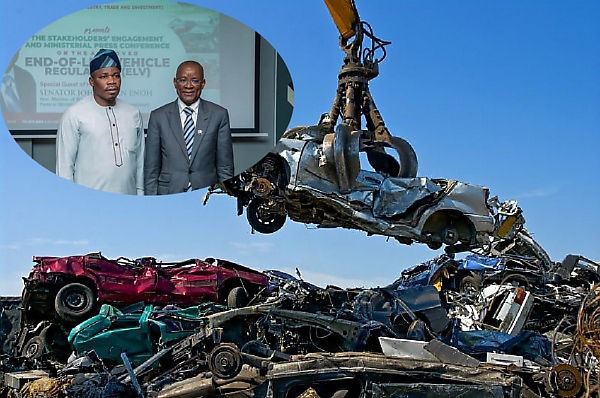
FG launches End-of-Life Vehicle (ELV) Recycling Regulation to boost the economy and environmental sustainability.
According to NADDC projections, ELV regulation will directly and indirectly create approximately 40,000 jobs.
In addition, it is expected to contribute to the recycling of valuable raw materials, generate significant revenue for the economy.
The initiative by the NADDC also aims to enhance road safety by removing unsafe vehicles from the roads.
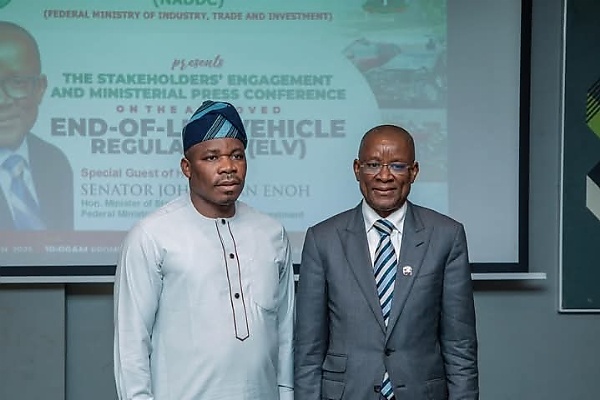
The National Automotive Design and Development Council (NADDC) has officially launched the approved End-of-Life Vehicle (ELV) Recycling and Regulation to address the environmental hazards of vehicles that have reached the end of their life.
The initiative seek to address the growing challenges posed by the increasing number of end-of-life vehicles on the Nigerian roads. Proper implementation of the ELV recycling regulation is expected to generate a significant revenue for the economy.
At the launch event on Wednesday 5th March 2025, the Minister of State for Industry, Senator John Owan Enoh, stressed that the regulation is a crucial part of Nigeria’s broader vision to build a thriving automotive industry while protecting the environment.
“The automotive sector is vital to our economy. It provides mobility, drives growth, and fosters employment opportunities. However, as the sector expands, we are also faced with the challenge of managing end-of-life vehicles.”
“This regulation represents a comprehensive, forward-thinking approach to managing the environmental and economic implications of these vehicles. By recycling them, we are not just tackling waste, we are creating a circular economy that will generate thousands of jobs and provide valuable resources for industries,” he said.
-
See Also : Tyre Killer : Oyo Introduces One-way Tyre Spikes To Deter Motorists Against One-way Driving (Video)
In his welcome address, NADDC Director-General, Mr. Oluwemimo Joseph Osanipin, outlined how the regulation would create a sustainable economic and environmental advantage for Nigeria.
“We recognize the urgent need to manage end-of-life vehicles properly,” he said.
“This regulation not only protects our environment but also creates new business opportunities, stimulates economic growth, and generates thousands of jobs across the value chain,” he added.
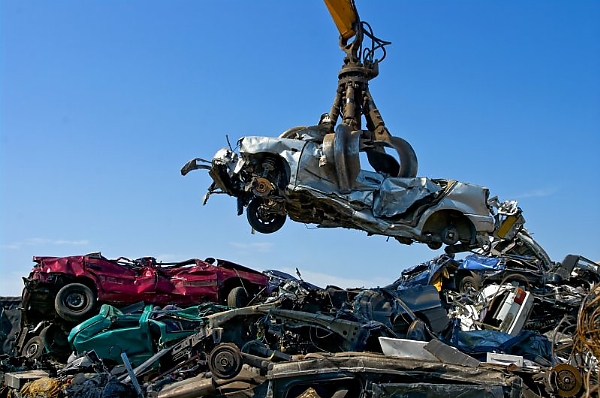
According to NADDC projections, the ELV regulation will directly and indirectly create approximately 40,000 jobs, contribute to the recycling of valuable raw materials, and generate significant revenue for the economy.
The initiative also aims to enhance road safety by removing unsafe vehicles from the roads, which is expected to reduce accidents and improve traffic conditions across the country.
The event was attended by key stakeholders, including representatives from the Association of Motors Dealers of Nigeria (AMDON), the Federal Road Safety Corps (FRSC), the Standards Organization of Nigeria (SON), the United Nations Industrial Development Organization (UNIDO) etc.
The successful implementation of the ELV regulation promises to position Nigeria as a leader in sustainable industrial practices, paving the way for a cleaner, greener, and more prosperous future.



-

 Celebrities Auto5 days ago
Zimbabwe President’s Latest Ride Is Armored Rolls-Royce Cullinan, Joins Maybach S-Class Sedan And SUV
-

 News7 days ago
Putin Test-Drives Chinese-Designed Volga K50 Built At Former Volkswagen Plant
-

 Car Theft1 week ago
Oyo Police Bust Trans-National Car Theft Syndicate, Recover Stolen Lexus RX 350
-
 News1 week ago
1997 Cadillac DeVille d’Elegance: Why Dolly Parton Donated Her Favorite Car After 10 Years
-

 Celebrities Auto5 days ago
Why Burkina Faso’s President Traoré Rejects Luxury SUVs For 2011 Toyota ‘Buffalo’ As Official Car
-

 Celebrities Auto1 week ago
Burna Boy Lifts ₦1.6B Ferrari Testarossa Into His 26th Floor Penthouse
-

 News7 days ago
₦5.6 Billion ($3.5M) G-Stallion: Carlex Unveils One-Off G-Wagon With Horse-Inspired Roof Artwork
-

 News5 days ago
₦1.3 Billion Armored Rezvani Vengeance Lands In Nigeria Amid Insecurity, 2027 Elections