
News
Ford Puts EV Dealer Investment On Hold Amid Market Changes

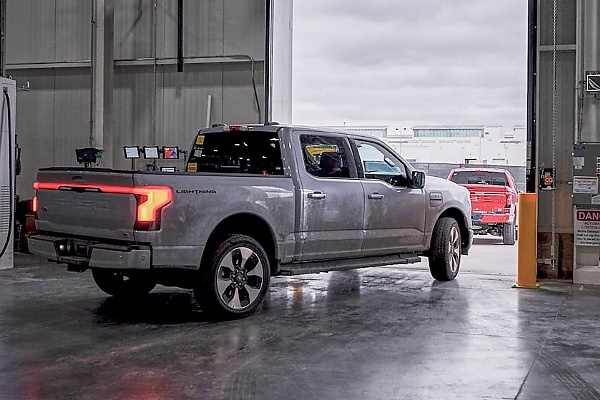
The electric vehicle market is experiencing its first slowdown, and Ford is feeling the heat. The automaker is asking its dealers to hit a pause on investments in the EV certification program as it reassesses its strategy in the face of an evolving landscape.
In late 2022, Ford’s CEO, Jim Farley, announced an ambitious plan to enrol 1,920 dealers in its EV sales program. However, by December of that year, several of the early participants had already opted out, and enrollment figures for 2024 now hover just above 50%. This drop in participation and significant losses in Ford’s Model E unit have prompted the company to reevaluate its approach.
Ford’s president of Ford Blue (ICE portfolio), Andrew Frick, acknowledged the need for change, stating that “there’s a lot that we’ll be reviewing.” The company plans to meet with its dealer council in early June to finalize updates based on feedback from nationwide gatherings.
One of the main concerns dealers raise is the uncertainty surrounding the EV market. Ford’s decision to delay some EV plans and focus on smaller, more profitable models has left dealers unsure of where to invest their resources. Frick reassured dealers that the company is working to align its dealer network with its evolving EV strategy.
While Frick didn’t elaborate on the upcoming changes, he emphasized that the dealer council and executives are in agreement. His words were precise: “I think we’re both pretty aligned on the process based on what we heard.”
It’s not surprising that Ford has been asking its suppliers to help cut EV costs. The company anticipates a $5.5 billion loss in its EV business this year, with the Model E unit responsible for a $1.3 billion loss in Q1 2024 alone, following a $4.7 billion loss last year.
Ford expects its next-generation EVs to be profitable within 12 months of launch, and Farley has underlined the importance of Model E becoming a self-sufficient division within the company. In the interim, the company wants to introduce more hybrid models while it continues to develop profitable EVs.
The situation at Ford highlights the challenges facing automakers as they navigate the transition to electric vehicles. The EV market is still in its early stages, and there are many unknowns. However, it is painfully clear that legacy automakers like Ford will need to be agile and adaptable if they want to succeed in this rapidly changing landscape.





-
 News1 week ago
Chinese Body-Kit Maker Transforms Audi R8 Into Convincing Bugatti Chiron Lookalike
-

 News1 week ago
After A Recent Investment, Koenigsegg Is Now Valued At $1.4 billion
-
 Car Reviews1 week ago
Tesla Winds Down Cybertruck Production: 8 Unfulfilled Promises, From Boat-Like Capabilities To 500-Mile Drive Range
-

 News5 days ago
Davido Adds 1-of-50 BRABUS 800 Adventure XLP Worth ₦2.5 Billion To His Stunning Fleet
-

 News1 week ago
Philippines Struggles To Sell $1.6M McLaren Senna And $8.9M LaFerrari Nearly Two Years After Seizure
-
 Auto Sport1 week ago
BYD’s Denza B5 Luxury SUV Pulls 400,000-Pound Boeing 747 Jet Using Just 2 Wheels And In Electric Mode
-

 News1 week ago
More Than 80,000 Hyundai Palisade SUVs Are Being Investigated By The NHTSA
-

 News6 days ago
Toyota Upgrades The Sienna Minivan For The 2027 Model Year