
News
Nigeria Approves Tax Waivers For 4,000 Electric Vehicles In First Half Of 2026 Despite Power Challenges

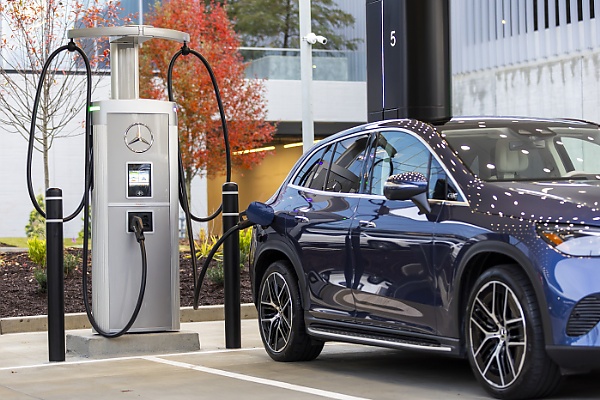
Nigeria is stepping up efforts to increase electric vehicle (EV) adoption, with nearly 4,000 EVs receiving tax waivers in the first half of 2026, according to a Reuters report. The approvals are part of a government programme supporting cleaner transportation, local assembly and wider EV adoption.
Nigeria’s 2022 Energy Transition Plan targets EVs accounting for 60% of the country’s vehicle fleet by 2050. To encourage buyers, the government exempted EVs from value-added tax in 2024 and reduced import duties to zero this year from 5%.
Higher petrol prices following the removal of the fuel subsidy in 2023 have also increased interest in electric motorcycles, cars and buses. However, Nigeria’s ambitious EV plans are facing a familiar problem: unreliable electricity.
According to the report, the national grid supplies around 4,000 megawatts to more than 200 million people, creating a challenge that leaves charging stations, dealerships and battery-swapping operators dependent on petrol and diesel generators when grid electricity fails.
Reuters reported that Nigeria had about 48 public EV charging stations by late 2025, mainly concentrated in Lagos and Abuja, compared with more than 500 in South Africa. As a result, many EV owners charge their vehicles at home using portable cables connected to household outlets.
Bolanle Boboye, an executive at SAGLEV, Nigeria’s first electric vehicle manufacturer, said the country should not wait for perfect electricity before embracing EVs.
“If we wait for electricity to become perfect before adopting EVs, the rest of the world will leave us behind,” he said.
Boboye added that EVs could still reduce emissions even when charged with diesel-generated electricity, saying “even when EVs are charged using diesel-generated electricity, they can still help reduce overall emissions.”
Interestingly, unreliable power is also influencing the vehicles Nigerians choose as Boboye noted that sales of extended-range EVs doubled this year because their fuel-powered range extenders help drivers overcome charging limitations.
Chinese automakers including BYD and Geely are also expanding their electric and hybrid offerings in Nigeria. While tax incentives could accelerate adoption, Nigeria’s EV transition will ultimately depend on more reliable electricity and a much stronger charging network.
Source: Reuters

-

 Celebrities Auto1 week ago
Lionel Messi Just Ordered Sunreef’s ULTIMA 88 Luxury Yacht, Worth Up To $10.7 Million
-

 Car Theft1 week ago
Man Flees With Stolen Tundra During Test-Drive, Crashes Into Lagos Canal After Damaging Dozens Of Vehicles
-
 News1 week ago
The Toyota Mirai Is Turning Out To Be The Worst Resale Value Car The Company Has Ever Made
-
 News1 week ago
The New Electric Jaguar Type 01 Has Reportedly Received 50,000 Orders
-
 News1 week ago
BMW Considers New Flagship SUV To Sit Above The X7, Specifically For US Market
-

 News6 days ago
OMODA & JAECOO Strengthen European Presence, Record 73,421 Global Sales
-
 News1 week ago
Alfa Romeo Cuorerosso Concept Debuts With 2+2 Coupé Design, 2.9L V6 Full-Hybrid Powertrain
-
 News1 week ago
BMW Is Bringing The V8 Back In Another Model