
News
BMW And Mercedes Give Up On “Sophisticated” Autonomous Driving


Ten years ago, it seemed that fully autonomous driving was just around the corner. Manufacturers have announced cars in which drivers will be able to read, work or relax while electronics control the vehicle. But the reality turned out to be much more complicated.
BMW and Mercedes, the two manufacturers that were among the first to offer advanced level 3 autonomy, have now withdrawn it from their most luxurious models. The reason is surprisingly simple: buyers are not interested enough.
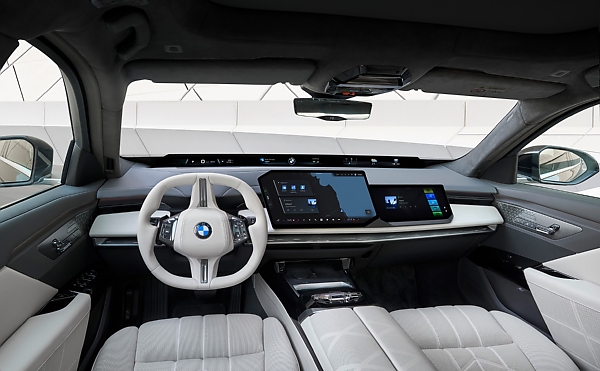
This was openly admitted by BMW’s development director Joachim Post in an interview with Motor1. The German manufacturer removed the Personal Pilot L3 system from the range of the facelifted 7 Series and the electric i7 because the demand simply did not justify the costs of development and production.
The system allowed the car to completely take control of traffic jams on certain sections of German highways, at speeds of up to 60 km/h. The driver did not have to constantly follow the traffic, but he had to be ready to take control when the car called him to do so. The problem was not only the price of approximately 6000 euros, but also the very limited possibility of use. Buyers obviously didn’t want to pay that much for a system that only works under certain conditions.
At the same time, BMW offers a more advanced assistance system, level 2, which can control the car on the highway at speeds of up to 130 km/h, without the need for the driver to keep his hands on the steering wheel. The car can even suggest overtaking, which the driver confirms by looking in the rearview mirror. There is, however, an important difference. At level 2, the driver must constantly follow traffic and remains responsible for driving. At level 3, it may temporarily stop monitoring traffic, while the system takes over the responsibility for management within the permitted conditions.
A similar decision was made by Mercedes, which also abandoned the Drive Pilot system in the renewed S-Class. Although that technology allowed autonomous driving up to 95 km/h in Germany, the manufacturer decided to focus on more affordable and practical level 2 systems.
The post explains that Level 3 autonomy requires significantly more expensive technology, including lidar, additional cameras and radars, and backup safety systems for steering, braking and power. All this increases the price and brings benefits to the user that he can only use occasionally. However, BMW is not completely giving up on development. It is particularly watching the Chinese market, where advanced autonomous driving systems are making rapid progress. Post thinks Level 3 will have a place in the future, but probably not in mass-market cars.







-
 News1 week ago
JLR Returns To Operating Profit As Range Rover Electric, Sport Electric And Jaguar Type 01 Lead Its New EV Push
-
 News1 week ago
Mini Production At Oxford, UK, Has Stopped Due To Part Shortages
-

 News1 week ago
Skoda To Stop Production Of The Octavia Diesel Engine By Next Year
-

 News1 week ago
Musk Said The Tesla Cybertruck’s Demise Isn’t Due To Its Lack Of Profitability
-

 Celebrities Auto6 days ago
Bentley Partners With PSG Until 2028, But Players Won’t Be Getting Free Luxury Cars
-

 Car Comparison5 days ago
Just VW And Audi”: Carwow Presenter Struggles To Find Lamborghini Parts Under Fast-Selling Urus SUV
-
 News5 days ago
Toyota’s 8-Speed Transmission Is Giving The Company A Lot Of Issues
-
 News6 days ago
BYD Apologises After New Great Tang SUVs Were Delivered With Wider Rear Wheels Fitted At The Front

