
News
2020: Worst Year For Aviation, As Global Airlines To Lose $84bn – IATA

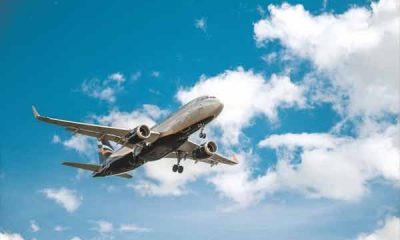
There will be a projected loss of $84.3-billion for global airlines in 2020. This is according to the global aviation association, the International Air Transport Association (IATA).
The losses are due to travel bans and visa restrictions around the world because of the Covid-19 pandemic.
This has caused a sharp fall in demand and revenue. It has also forced airlines to halve international passenger traffic or to slash costs.
In some countries, governments are stepping in to infuse funds and keep airlines afloat.
-
See Also: 10 Oldest Airlines In The World
Financially, 2020 will go down as the worst year in the history of aviation, IATA’s Director General Alexandre de Juniac said.
He said this as he released the financial outlook for the air transport sector on Tuesday. Based on passenger estimates, airlines will lose $37.54 per passenger, it said.
IATA said passenger demand has evaporated as international borders closed and countries locked down. This was done to prevent the spread of the virus. This is the biggest driver of industry losses, it said.
At the low point in April, global air travel was roughly 95 per cent below 2019 levels. The global airline body said passenger numbers will roughly halve to 2.25 billion, approximately equal to 2006 levels.
Capacity, however, cannot be adjusted quickly enough with a 40.4 per cent decline expected for the year.
According to IATA, passenger revenues are expected to fall to $241 billion (down from $612 billion in 2019). “This is greater than the fall in demand, reflecting an expected 18 per cent fall in passenger yields as airlines try to encourage people to fly again through price stimulation,”.
With open borders and rising demand in 2021, the industry is expected to cut its losses to $15.8 billion.
“Airlines will still be financially fragile in 2021. Passenger revenues will be more than one-third smaller than in 2019. And airlines are expected to lose about $5 for every passenger carried. The cut in losses will come from reopened borders leading to increased volumes of travellers.
Strong cargo operations and comparatively low fuel prices will also give the industry a boost. Competition among airlines will no doubt be even more intense. That will translate into strong incentives for travellers to take to the skies again,” said de Juniac.







-

 News1 week ago
Bugatti Wars: Davido Flaunts $5 Million W16 Mistral, A Day After Burna Boy’s Chiron Arrived Nigeria
-

 News1 week ago
The Mazda MX-5 (Miata) May Become An EV
-

 Celebrities Auto6 days ago
₦6B Worth of Supercars: Jeff Forex And Habby Forex Takes Delivery Of Their Lamborghini Aventador SVJs
-

 News5 days ago
Davido’s Shows Off $5m Mistral, Burna Boy’s Chiron, EFCC Seizes Aisha’s Exotic Cars Worth ₦4.3b, Hongqi E-HS9 Spotted, Nigerian News In July
-

 News1 week ago
The Largest U.S. Recall Of Mercedes-Benz In 2026 Began With A Single Little Component
-

 News6 days ago
Full Lists Of Categories Of Vehicles Exempted From Customs Import Duty & VAT, Those Still Taxed
-
 News6 days ago
Through 2027, BMW Will Flood The Market With New Vehicles
-

 News5 days ago
Lamborghini Urus SE Performante, Bentley Torcal, McMurtry Spéirling PURE, McLaren 788HS, News In July