
News
Which One Would You Go For and Why: Rear Wheel Drive Or Front Wheel Drive?

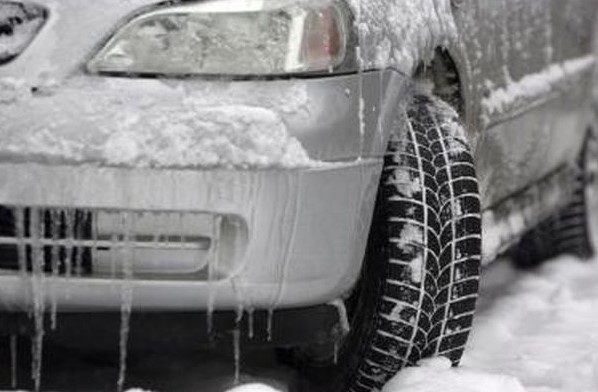
It feels good to have you reading our post again. Thanks for coming back.
On this day, we will talk about the Front wheel drive and Rear wheel drive. We all are here to rub minds together and share knowledge and experiences. Let’s start with a brief introduction.
The wheels of cars get their rotational power from the engine. The rotational force of the engine’s crankshaft turns other shafts and gears that eventually causes the drive wheel to rotate. The drive-shaft causes the axle to rotate which in turn rotates the wheel. The drive-train consists of every component that links the crankshaft to the drive wheels.
Depending on design, power from the engine can either be transmitted by transmission to the front wheels, rear wheels or to all four wheels. Drive wheel is the wheel receiving the power from the engine.
Automobiles come in front-wheel, rear-wheel, or Four-wheel (manual or automatic) version.
For this post, we would talk more about FWD and AWD. I hope you know what we mean by those – FWD and AWD?
FWD is the acronym for front-wheel drive while RWD stands for Rear-wheel drive.
Apart from the All-wheel-drive, there is no particular wheel drive that is best for all situations. Each layout has where it is good as well as where it is bad.
Front-wheel-drive:

In front wheel drive cars, both front wheels do the pushing and steering.
Most cars with moderate power like sedan come in this model. Because the powertrain is just on the front wheel and 65% of the car weight on the front wheels, there are lighter weight at the remaining part of the car. There is less intrusion of the engine and powertrain weight on the remaining part of the car.
Front-wheel Drive cars come with the following advantages:
- Good handling i.e. good steering capability at high speed.
- It has good fuel economy
- It offers good traction on slippery surfaces because its weight is concentrated on the driving wheel.
Even with the above mentioned advantages, the front-wheel has disadvantages. Due to weight transfer, on sharp acceleration, traction is reduced.
On hard braking, weight of the car is transferred to the front wheels. This causes the tires and brake pads to wear out much faster than those of the rear wheel.
On the other hand we have:
Rear-wheel drive:

In rear wheel drive cars, the rear wheels do the pushing while the front wheels are reserved just for steering.
With the exception of light weight trucks, almost all heavy duty vehicles use rear-wheel drive.
You can easily know a rear-wheel when you check underneath the car. There is a pumpkin-like looking structure – rear axle housing – in the center at the rear.
Rear wheel drive comes with the following advantages:
- They give good acceleration
- The weight balance is awesome
- They have good road handling
- Their stopping is cool
Rear wheel drive cars are at their weakest point in poor weather conditions like when it is raining and snow falls. In such conditions, they are prone to loss of traction.
This is a post meant for discussion. Feel free to share your thoughts, knowledge and experiences; we would love to hear from you.
Download Our Android App Today… https://play.google.com/store/apps/details?id=com.donald.autojosh&hl=en
Check import duty for over 5,000 cars in Nigeria.. https://autojosh.com/import-duty/








-
 Celebrities Auto6 days ago
Swedish Soccer Icon Zlatan Ibrahimovic Buys $4 Million Ferrari F80 For 45th Birthday (Photos)
-

 News1 week ago
Who Owns Who? World’s Largest Automakers And The Car Brands They Currently Control
-
 News3 days ago
Carloha Goes “The Extra Mile” To Redefine Vehicle Ownership Experience In Nigeria
-

 Celebrities Auto1 week ago
Kizz Daniel Flaunts Car Collection With ₦1.6bn Ferrari Purosangue, Rolls-Royce Cullinan & Mercedes G-Class
-

 Celebrities Auto3 days ago
No Innoson This Year As BBNaija Season 11 Winner Temi Receives ₦60m Hyundai Tucson, ₦90m Cash Prize
-
 News7 days ago
‘Temu Range Rover’ Jaecoo 7 Tops UK Car Sales In September As Chinese Brands Continue Their Global Rise
-

 News6 days ago
Porsche Will Fit A Petrol Engine In The Macan Again In 2028
-

 News1 week ago
Burna Boy’s Bugatti, Otedola’s Aston Martin, Kizz Daniel’s ₦1.6B Ferrari SUV, Sunny Ade’s Gold Rolls-Royce, Nigerian News In September


