
News
Vehicle Importation Into Nigeria Falls 60.8% From 28,024 To 10,991 Units In The First 6-months Of 2024

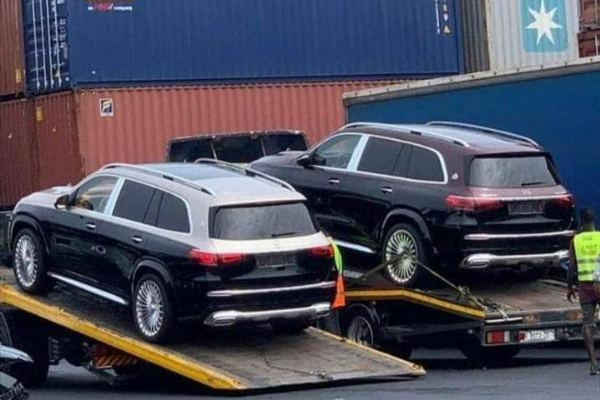
Vehicle importation into Nigeria falls 60.8 per cent from 28,024 to 10,991 units in the first six months of 2024.
The sharp decline in the importation of vehicle into the country reflects the impact of the naira depreciation and high duties.
Number of ships that called at the nation’s Seaport also fell by 4.3% to 251 from 275 during the period under review.
During H1 2024, the Gross Tonnage of ships rose 6.9%, thanks to the berthing of bigger vessels, especially at Lekki Port.
Vehicle importation into Nigeria was down 60.4 per cent year-on-year to 10,991 units in the first six months of the 2024, a report of the just concluded quarterly meeting of the Nigerian Port Consultative Council (NPCC) reveals.
The report, which reflects the impact of the naira depreciation and high duties stated that “Vehicle Traffic shows a total 10,991 units of vehicles was handled during the period under review, indicating a drop of 60.8 per cent from 28,024 units in 2023.”
During the period under review, the number of ships that called at the nation’s Seaport also fell by 4.3% to 251 from 275, though the Gross Tonnage of ships rose 6.9%, thanks to the berthing of bigger vessels, especially at Lekki Port.
The report added:
“The cargo throughput, excluding crude oil, stood at 21.186 million metric tons against 18.234 million metric tons in 2023 indicating an increase of 16.1 per cent.
“Inward cargo traffic reached 13.563 million metric tons, representing a 10.5 of cargo throughput in 2023. Outward cargo traffic was 7.6234 million metric tons, representing 27.7 per cent.
Container traffic for the period under review stood at 398,447 between January and June, showing an increase of 2.3% from 389,303 Twenty Foot Equivalent Units (TEUs) handled in H1 2023.
“A further analysis of container traffic revealed that import containers accounted for 3.4 per cent with 198,415 TEUs while export container traffic stood at 195,106 TEUs representing a decrease of 1.2 percent of total container traffic.
“A breakdown of export container traffic revealed that empty containers accounted for about 36.3 per cent of total export container traffic. The average turn-around time of vessels was 4.6 days, compared with 5.1 days in 2023.
“The significant improvement in average turn-around time for vessels was brought about by the impact of the Lekki Deep Sea Port which achieved an average turn-around of only one day.
“The increase in Gross Registered Tonnage, GRT, despite the drop in the number of vessel calls revealed the berthing of bigger vessels, especially at Lekki Port where the average GRT of vessels is 3,801,191. This further gives credibility to the importance of a deep seaport to the Nigerian maritime or port development.
“Therefore, the collective efforts of all stakeholders are required to ensure that Lekki Deep Seaport does not suffer the same fate as Apapa for ease of cargo evacuation.”

-

 Celebrities Auto7 days ago
Swedish Soccer Icon Zlatan Ibrahimovic Buys $4 Million Ferrari F80 For 45th Birthday (Photos)
-

 News1 week ago
Who Owns Who? World’s Largest Automakers And The Car Brands They Currently Control
-

 News4 days ago
Carloha Goes “The Extra Mile” To Redefine Vehicle Ownership Experience In Nigeria
-

 Celebrities Auto1 week ago
Kizz Daniel Flaunts Car Collection With ₦1.6bn Ferrari Purosangue, Rolls-Royce Cullinan & Mercedes G-Class
-

 Celebrities Auto4 days ago
No Innoson This Year As BBNaija Season 11 Winner Temi Receives ₦60m Hyundai Tucson, ₦90m Cash Prize
-

 News1 week ago
‘Temu Range Rover’ Jaecoo 7 Tops UK Car Sales In September As Chinese Brands Continue Their Global Rise
-

 News7 days ago
Porsche Will Fit A Petrol Engine In The Macan Again In 2028
-

 News1 week ago
Burna Boy’s Bugatti, Otedola’s Aston Martin, Kizz Daniel’s ₦1.6B Ferrari SUV, Sunny Ade’s Gold Rolls-Royce, Nigerian News In September


