
News
After Suffering A Billion-Dollar Loss, Lotus Switches To Factory Sharing

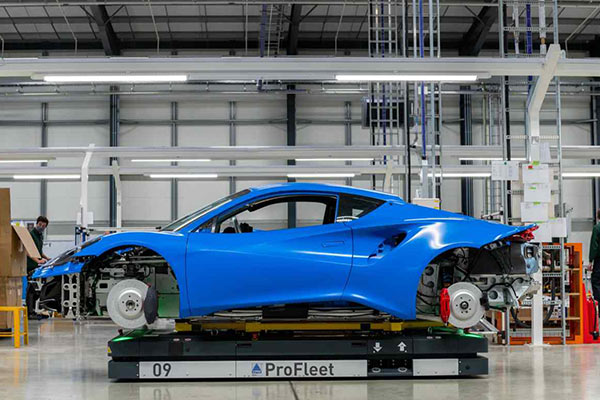
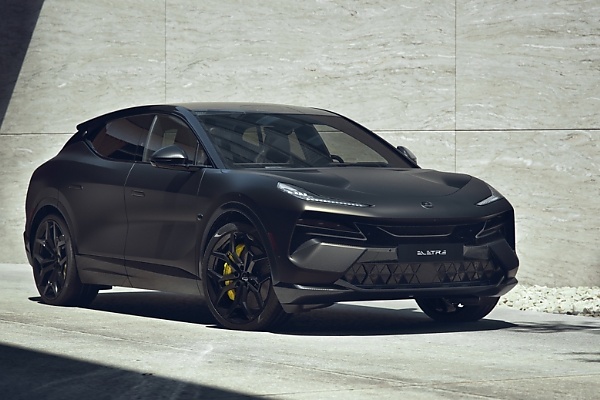
Facing a billion-dollar loss in 2024, a storied British sports-car brand is cutting nearly half its workforce. To stabilize, the manufacturer is repurposing its underutilized Hethel factory as a shared production space, partnering with Zenos Cars to assemble track-focused roadsters at the site.
The manufacturer’s initial strategy centered on capturing the luxury electric vehicle market; however, this ambitious vision ultimately proved commercially unsuccessful. Due to restrictive international trade penalties, the company faced significant barriers to importing vehicles into key Western regions, resulting in limited availability within specific North American markets. Furthermore, traditional consumers demonstrated a strong resistance to the brand’s new, heavier vehicle platforms.
In response to declining demand, leadership has abandoned its previous strategic timeline and formally retracted its commitment to an exclusively electric vehicle portfolio. The company has substantially lowered its global sales projections for the end of the decade, shifting its focus from mass-market volume to a more sustainable target of thirty thousand annual units. The updated product roadmap now prioritizes the integration of internal combustion engines with battery-electric technology.
This strategic pivot ensures that internal combustion engineering will remain a core component of the brand’s future operations. The manufacturer is currently developing a high-performance V8 hybrid project and is actively integrating gasoline-electric powertrains into its existing mid-engine models. These hybrid configurations are intended to serve as a viable alternative for global markets that lack the necessary infrastructure for full electrification.
Leadership misjudged the brand’s heritage by prioritizing heavy SUVs over the lightweight engineering consumers value. To survive, the company must shrink its operational footprint and return to its roots. Following the model of niche manufacturers like Caterham and partnering with Zenos for production is essential to preserve the brand’s legacy.











-

 Celebrities Auto1 week ago
Billionaire Gifts Popular Bishop 2026 Rolls-Royce Cullinan And Over ₦370 Million Cash For Fuel
-

 News1 week ago
Rare Bugatti Veyron 16.4 Grand Sport Vitesse ‘Jean-Pierre Wimille’ Sells For Record $5.44M
-

 News1 week ago
Top Luxury Car Brands 2026: Porsche Leads Brand Finance Ranking For 9th Consecutive Year
-

 News1 week ago
There Will Be Several Variations Of The Lamborghini Temerario, Including Some Surprises
-

 News1 week ago
It’s Not China’s Floating Cars: Moment Raging Floodwater Sweeps Tesla Away In Connecticut
-

 News1 week ago
Suzuki Wants To Cut Car Production Time By Half To Match Chinese Manufacturers
-

 News1 week ago
China’s BYD Close To Overtaking Ford In European Sales
-
 News1 week ago
Next-Generation Ford Ranger Is In Development In Australia

