
News
Audi A6 And Q5 To Get A New V6 Diesel Engine

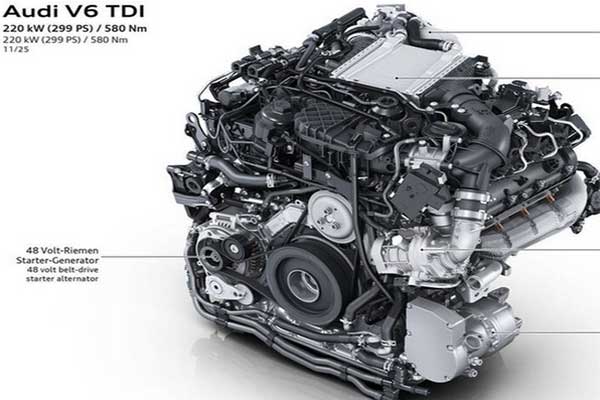
Audi is expanding its engine range for the Audi Q5 and Audi A6 with a 3.0 V6 diesel engine that delivers 220 kW (299 hp) and 580 Nm of torque. For the first time, MHEV plus technology, which delivers up to 18 kW (24 hp) of additional power, is used in combination with an electrically driven compressor.
The engine thus sets new standards compared to its predecessors. The interaction of three electrified components ensures exceptional driving pleasure and highly efficient performance. The V6 TDI quattro can now be ordered for both models.
With MHEV plus technology, Audi offers partial electrification that improves both performance and the driving experience while reducing CO₂ emissions and fuel consumption.
In the improved 3.0 V6 TDI engine, MHEV-plus technology is now expanded to include an electrically driven compressor for the first time—a technological leap that provides the perfect balance between a dynamic driving experience and optimized fuel consumption.
At the same time, the electrically driven compressor is an integral part of the engine management system and the newly developed combustion strategy.
The electrically driven compressor is located behind the conventional turbocharger and intercooler in the intake manifold. It is powered by a 48-volt on-board electrical system. Compared to previous models equipped with an electrically driven compressor, such as the S4, S6, and SQ5, the current generation is significantly more powerful—thanks to a wider operating range and faster pressure build-up.
The new V6 TDI is approved for use with HVO fuel that complies with the European standard EN 15940—indicated by the XTL sticker on the fuel filler cap. XTL (X-to-liquid) is the common term for fuels of this standard, where the “X” stands for the variable source component. HVO stands for hydrotreated vegetable oil. This sustainable fuel enables a reduction in CO₂ emissions of 70 to 95 percent compared to diesel derived from petroleum.
HVO is produced using residual and waste materials, such as used cooking oil from the food industry or agricultural by-products. Using hydrogen, the oils are converted into saturated aliphatic hydrocarbons. This modifies the properties of the vegetable oils to make them suitable for use in diesel engines. They can be blended with conventional diesel to replace fossil components or used as a 100% clean fuel. New vehicles leaving Audi’s two German plants in Ingolstadt and Neckarsulm are delivered with HVO fuel already in the tank.
















-

 Celebrities Auto1 week ago
Throwback: When KC Luxury Boasted Of Being The Only Person In The World To Own Two Rare Mercedes-Maybachs
-

 News6 days ago
Andrew Tate’s Lawyers Claim His Famous Bugatti And Aston Martin Are Rented
-

 Car Theft2 days ago
Oyo Police Bust Trans-National Car Theft Syndicate, Recover Stolen Lexus RX 350
-

 News1 week ago
Who Is Herbert Wertheim? The 87-Year-Old Billionaire Who Bought The $40M Ferrari Luce “Chassis 0”
-

 News3 days ago
1997 Cadillac DeVille d’Elegance: Why Dolly Parton Donated Her Favorite Car After 10 Years
-

 News1 week ago
The Tesla Cybercab Has Begun Transporting Passengers In Austin Texas
-

 Celebrities Auto4 days ago
Burna Boy Lifts ₦1.6B Ferrari Testarossa Into His 26th Floor Penthouse
-

 Autoshows & Awards1 week ago
9 Coolest Cars Unveiled At The Quail: From Bugatti Destrier to Lamborghini Revuelto SV