
News
Ford, Purdue University Aims To Solve EVs Biggest Problem With Charging Systems That Tops Battery In 5-Mins

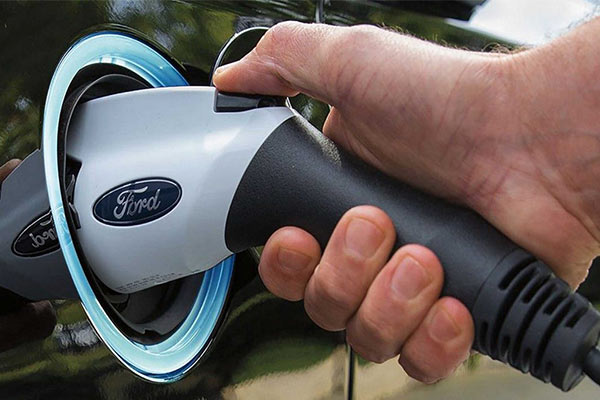
Ford, Purdue University to solve EVs biggest problem with Charging Systems that tops battery in 5-Mins or as fast as filing up at the station.
Ford and Purdue University researchers have developed a new, patent-pending charging system that solves one of the biggest problems with electric vehicles. Ford’s new cooling cables promises to recharge an electric vehicle battery-pack in roughly 5-minutes or as fast as filling up at a gasoline pump.
Aside from range, charging time is one of the biggest problems for current electric vehicles. Even with DC fast charging appearing at more Tesla stations, most vehicles with ideal battery, charger, and cable conditions still take upwards of at least 20 minutes.
However, Ford and Purdue can deliver over 2,400 amps to their vehicles, resulting in drastically faster charging times.
And while Ford and its partners at Purdue University didn’t go into a ton of details, as this is a patent-pending system, it all comes down to keeping the charging cables as cool as possible.
Just like charging a phone, or anything else for that matter, the electric current creates heat. This is especially true for electric vehicles, and by using liquid-cooled cables, the current can be higher and remain at higher amps at the same time.
-
READ ALSO: Charging EV Now As Fast As Buying Fuel After Xpeng Launched Charger That Adds 200km In 5 Mins
According to Ford and Purdue, the charging cables have a liquid inside at first, which can then change to vapor and absorb large amounts of heat in the process. This is similar to the principle used in air conditioners and other cooling systems. They’ve managed to bottle that into cables, which will hopefully result in super-fast charging systems.
It’s important to note that this is only one part of the problem. Charging cable can be as fast as it wants, but the battery must be able to handle those higher currents too. Either way, this is undoubtedly a step in the right direction, and hopefully, we’ll see this type of charging technology sooner than later.











-

 Celebrities Auto5 days ago
Throwback: When KC Luxury Boasted Of Being The Only Person In The World To Own Two Rare Mercedes-Maybachs
-

 Celebrities Auto1 week ago
Inside KC Luxury’s Car Collection: From A ₦2.5B Brabus 800 Adventure XLP To Alicia Keys’ Former Maybach
-
 News2 days ago
Andrew Tate’s Lawyers Claim His Famous Bugatti And Aston Martin Are Rented
-
 News1 week ago
Porsche And Chinese Company Xpeng Collaborate To Lower Average Emissions In Europe
-
 News6 days ago
Who Is Herbert Wertheim? The 87-Year-Old Billionaire Who Bought The $40M Ferrari Luce “Chassis 0”
-

 News1 week ago
“Wike Carry ‘Rivers’ Come Abuja”: Citizens React As Flash Floods Submerge Luxury Vehicles
-

 News5 days ago
The Tesla Cybercab Has Begun Transporting Passengers In Austin Texas
-

 News1 week ago
RM Sotheby’s Top 10 Best Sellers At Monterey Auction: From $40M Ferrari Luce To $34.65M McLaren F1 GTR