
News
Honda Gained Important Knowledge From Toyota’s Tundra Engine Failures

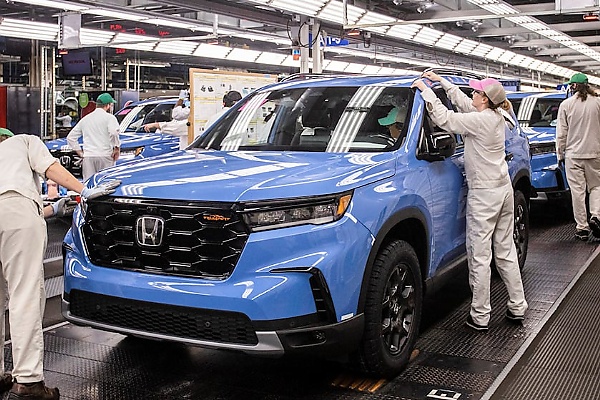
To avoid reputational damage from engine failures like those at Toyota and Ford, Honda is prioritizing reliability and rapid incident response over development speed, ensuring quality control remains its primary focus amidst global competition.
Honda is firmly committed to upholding the high reliability standards that its customers have come to expect. In a recent interview with The Drive, a senior executive addressed whether the manufacturer has drawn lessons from the well-documented V6 engine failures currently affecting Toyota.
“Preventing quality issues is vital, but recovery speed is equally critical,” says Honda EVP Noriya Kaihara. “Leaving customers with defective vehicles and delayed solutions causes major reputational damage. Swift, decisive action is essential when unforeseen problems arise after a product reaches the market.”
Toyota’s V6 engine failures, caused by production debris, forced a massive recall and unconventional repair guidance. Many owners still face significant issues, with some replacement engines failing repeatedly.
Honda is prioritizing reliability over production speed to keep pace with rapid technological advancements. CEO Eiji Fujimura emphasized that the company will not sacrifice its reputation for quality to match competitors, opting instead for a rigorous, stage-by-stage evaluation process for all new technologies.
“Innovation brings risk, so we must proactively evaluate new systems in real-world environments,” explained Kaihara. “Our quality control mandates that no phase proceeds without confirming the integrity of the previous one. Furthermore, our independent quality department ensures that every new technology undergoes rigorous review, keeping quality as our primary objective.”
Despite its quality focus, Honda faces challenges, including an NHTSA investigation and class-action lawsuit over premature failures in its 3.5-liter V6 engine.
As legacy automakers balance rapid innovation with traditional reliability, maintaining the bulletproof dependability of older models becomes increasingly difficult in the era of complex, software-defined vehicles.


-
See More: Honda Set To Cut Costs Worth $9 Billion




-
 News1 week ago
JLR Returns To Operating Profit As Range Rover Electric, Sport Electric And Jaguar Type 01 Lead Its New EV Push
-
 News1 week ago
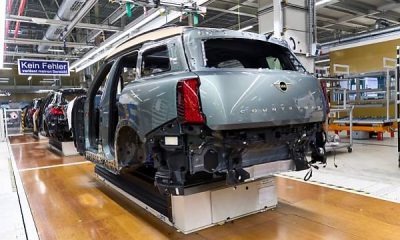
Mini Production At Oxford, UK, Has Stopped Due To Part Shortages
-

 News1 week ago
Skoda To Stop Production Of The Octavia Diesel Engine By Next Year
-

 News1 week ago
Musk Said The Tesla Cybertruck’s Demise Isn’t Due To Its Lack Of Profitability
-

 Car Comparison6 days ago
Just VW And Audi”: Carwow Presenter Struggles To Find Lamborghini Parts Under Fast-Selling Urus SUV
-

 Celebrities Auto7 days ago
Bentley Partners With PSG Until 2028, But Players Won’t Be Getting Free Luxury Cars
-
 News7 days ago
BYD Apologises After New Great Tang SUVs Were Delivered With Wider Rear Wheels Fitted At The Front
-
 News5 days ago
Toyota’s 8-Speed Transmission Is Giving The Company A Lot Of Issues

