
News
Mercedes’ Electric Cars Should Soon have An 80 Percent Longer Range

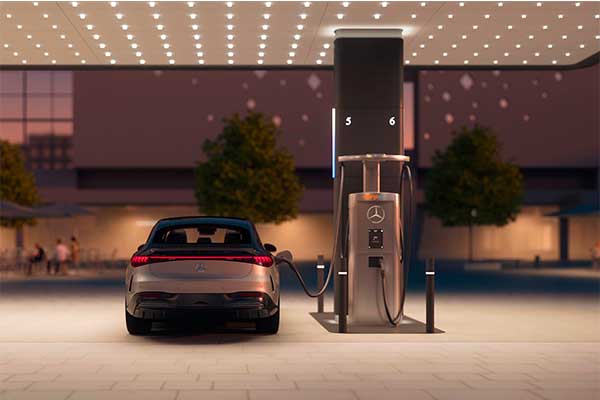
Developed in partnership with Mercedes-Benz, Factorial’s new solid electrolyte battery, called Solstice, achieves a high energy density that can increase range by up to 80 percent while enabling a more sustainable, energy-efficient and cost-effective battery manufacturing process.
Solstice batteries are expected to be available to customers by the end of the decade. The Solstice should achieve an exceptional energy density of up to 450 Wh/kg, which is almost double that of Tesla’s nickel-cobalt-manganese cells installed on the Model Y, which have an estimated energy density of around 272-296 Wh/kg.
As reported, the battery includes a new dry cathode design for more efficient and sustainable production. The battery was developed in cooperation with Mercedes-Benz as part of a permanent partnership. Solstice’s high energy density can extend range while significantly reducing vehicle weight and increasing vehicle efficiency.
The sulfide-based solid electrolyte system also solves safety problems, i.e. minimizes the risk of fire. A reduced need for cooling systems in the battery is also expected, which will reduce costs. By the way, Factorial is a company from the USA.








-

 Celebrities Auto1 week ago
Afrobeats Star Kizz Daniel Splashes ₦1.6 Billion On Brand New 2026 Ferrari Purosangue SUV
-

 Car Theft4 days ago
Fear Of Theft: Indian Man Hires Crane To Park New Mahindra SUV On Rooftop Before Traveling To Israel
-

 Celebrities Auto1 week ago
Burna Boy’s ₦9 Billion Bugatti Chiron VXX: The Making By Venuum
-
 News6 days ago
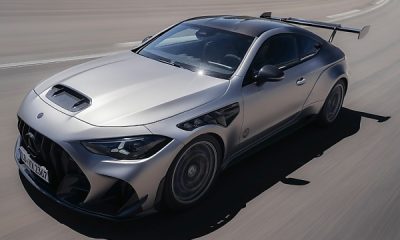
Mercedes-AMG CLE 646 Spezialanfertigung: Sold-Out 646-HP Collector’s Item Limited To Just 30 Units
-

 Business1 week ago
Mate Rimac Becomes Bugatti President Following Porsche’s Exit
-

 Celebrities Auto6 days ago
Is This Asake’s New Ride? Inside the 1,001-HP Lamborghini Revuelto Venuum Voltoro V1 Spotted With Giran Republic Branding
-

 Celebrities Auto6 days ago
Karim Benzema Shows Off New $740,000 Ferrari 12Cilindri and $800,000 Lamborghini Revuelto
-
 News5 days ago
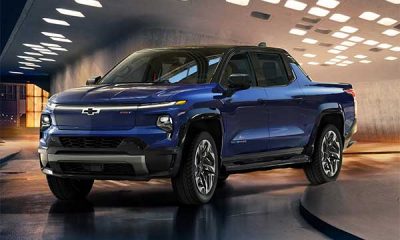
Chevrolet Silverado EV Remains For 2027 With A Subtle Update