
News
Next-Gen Range Rover Velar To Take A Different Approach

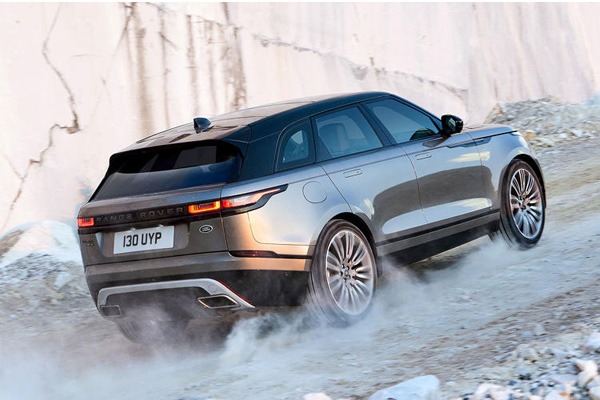
Dormer window
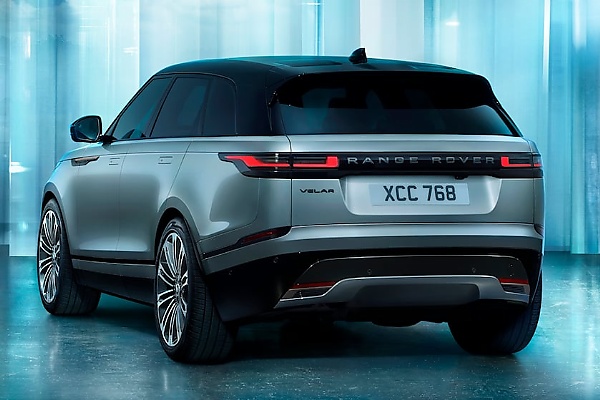
However, Land Rover is far from finished with the Range Rover Velar and is making its successor the most progressive Range Rover in the lineup. The car will be fully electric, and because aerodynamics are particularly important with such a powertrain, the Velar will be even lower and more elongated than its predecessor. Its most striking feature is undoubtedly the rear. Camouflaged prototypes were initially all spotted with a sort of dormer window on the back – a thick and angular plastic ‘bump’ covered in camouflage print. By now, we know why.
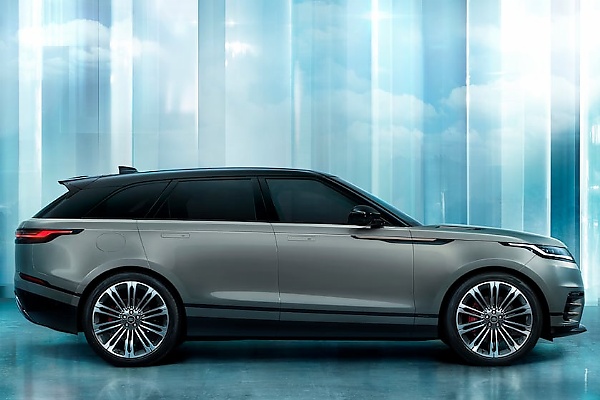
The new Range Rover Velar features a liftback-style tailgate with a very flat rear window, giving it a body shape we haven’t seen before from this brand or in this segment. The fact that the rear overhang appears to be growing somewhat and the ‘shoulder line’ is also lower reinforces the impression that this is almost more of a sedan-like vehicle than a true SUV. The Range Rover characteristics now come from only two sides: the large wheels and wheel arches, and the styling within those somewhat unusual frames.
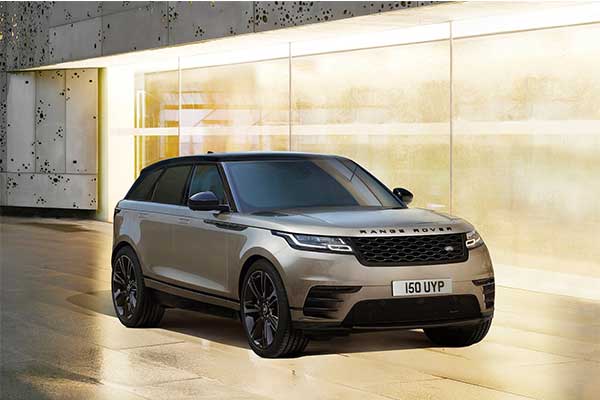
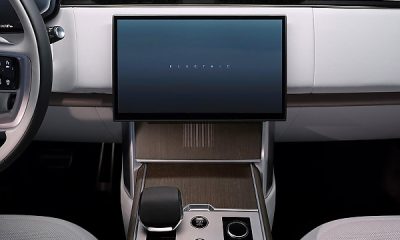
Apart from that body style, the new Velar is typically a Range Rover. The sleek, uncluttered design of the current model will remain, and the front and rear will also look more or less the same, although no part is carried over directly. The rear licence plate moves to the bumper, but here the light units are fused as before with a continuous bar. The design of the front end remains a bit of a mystery. After all, the appearance of current Range Rovers is largely determined by a substantial grille, which the electric Velar does not need. Our illustrator is guessing a black panel with lighting and sensors, but in practice, Range Rover could also opt for a different solution.
Electric first
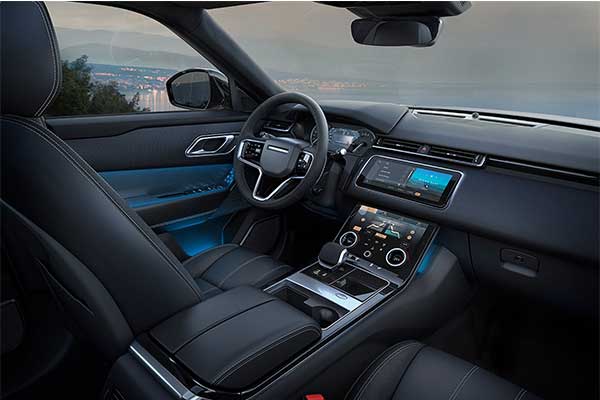
The new Velar – even that name may still change – is the first Land Rover on the EMA platform. This is a base developed specifically for fully electric cars. An electric Velar can then be a great solution, especially for (business) drivers shopping in the higher segment. They naturally always benefit from four-wheel drive, because in that respect, this Range Rover remains true to itself. The car will therefore have at least two motors, but three or even more is not ruled out.
Although the new Velar was therefore absolutely developed according to the ‘electric first’ philosophy, we know from Mercedes that this does not necessarily mean ‘electric-only’. Land Rover would be wise to follow that brand’s approach and offer versions with a combustion engine alongside the fully electric variants, even if only in a hybrid application. After all, the future of purely electric luxury models remains uncertain, as Porsche also discovered when it decided to offer the new Macan exclusively as an EV. That brand is now backtracking and is now – much too late – going to develop a new fuel-powered Macan after all, although it will not appear for several years. Land Rover could capitalize on this fact by fitting combustion engines into this car, although that is by no means certain yet.







-

 News6 days ago
Kaduna Governor Unveils 2026 Peugeot 3008 And 5008 SUVs, Urges Govt Patronage
-

 Auto Sport1 week ago
Italian GP: Lewis Hamilton Turns Heads With His Ferrari F40 — Why His “Dream” Car Is So Special
-

 Celebrities Auto1 week ago
Chinese President Xi Jinping’s Impressive Motorcade Turns Heads In Egypt
-

 Celebrities Auto4 days ago
Afrobeats Star Kizz Daniel Splashes ₦1.6 Billion On Brand New 2026 Ferrari Purosangue SUV
-

 News1 week ago
Toyota Hit By Long Waiting Times As The RAV4 Still Hasn’t Gotten To Customers
-
 News7 days ago
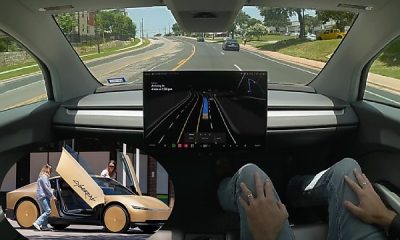
No Steering Wheel, Brake Pedal: US Launches Probe Into Elon Musk’s ‘Cybercab’ Self-Driving Taxis
-

 News5 days ago
Top Auto News Last Week: Uber Exits Nigeria, Launches UK Robotaxi, Tesla Debuts Steering-Wheel-Free Cybercab, Kaduna Gov Unveils 2026 Peugeot 3008 And 5008
-

 Celebrities Auto1 week ago
Open-Air Driving: Femi Otedola Takes His Aston Martin DBS Superleggera For A Spin In Monaco