
News
From 2022, New Homes And Buildings In England Must Have Electric Car Chargers By Law

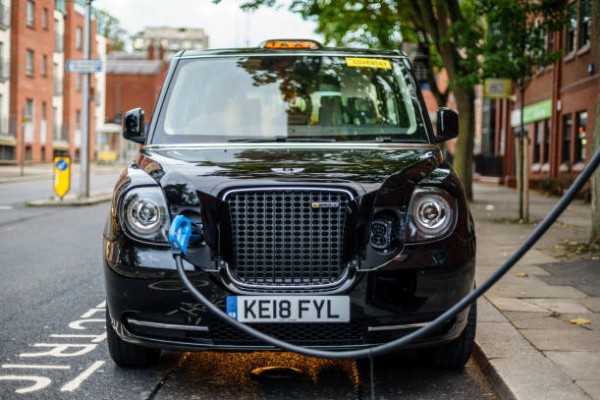
New homes and buildings in England will be required by law to install chargers for electric vehicles from next year.
New-build Supermarkets, workplaces and buildings undergoing major renovations in England will also come under the new law.
The move comes as the UK government raises to see up to 145,000 charging points installed across the country each year.
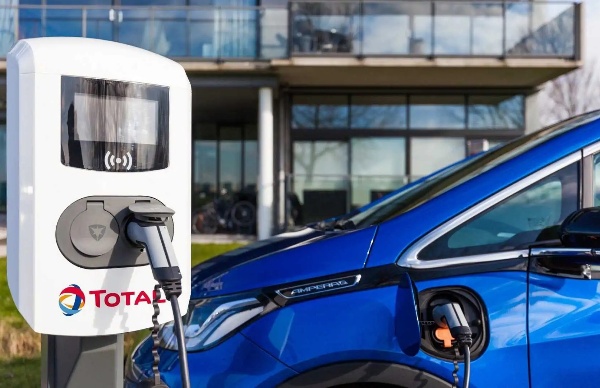
UK Prime Minister Boris Johnson on Monday said new homes and buildings in England will be required by law to install electric vehicle charging points from next year.
While announcing new laws at the Confederation of British Industry’s conference on Monday, Prime Minister Boris Johnson said the UK was going to “radically” change its cars, trucks, buses and other modes of transport.
“The force driving that change won’t be government, it won’t even be business…it will be the consumer. It will be the young people of today, who can see the consequences of climate change and will be demanding better from us.”
New-build Supermarkets, workplaces and buildings undergoing major renovations in England will also come under the new law, as the government raises to see up to 145,000 charging points installed across the country each year.
The UK government said that the new laws will “make it as easy as refuelling a petrol or diesel car today”. Britain currently has about 25,000 charging points, which is about one-tenth the figure which the Competition and Markets Authority said UK needs before 2030.
-
See Also : Charging EV Now As Fast As Buying Fuel After Xpeng Launched Charger That Adds 200km In 5 Mins
The move that new homes and buildings in England must have EV chargers by law from 2022 comes as UK aims to switch to electric cars, with new petrol and diesel cars sales banned from 2030.
The switch to electric vehicles is part of the UK’s strategy to hit climate targets by 2040, with cars and taxis accounting for 16% of UK emissions in 2019.
Mercedes, Jaguar Land Rover, Ford, General Motors, China’s BYD and Volvo have all signed a pledge at the COP26 climate conference in Glasgow, to eliminate new car emissions by 2040.
However, four of the world’s biggest carmakers, including Volkswagen, Toyota, Renault-Nissan-Mitsubishi Alliance Hyundai-Kia and BMW AG, failed to sign a COP 26 summit pledge to only sell zero emissions cars and vans by 2035. China, United States and Germany, have also not backed the deal
-
See Also : China Now Has Over 2 Million Charging Points, 69,400 Charging Sites, The Largest In The World








-

 Business5 days ago
Dangote Cement Rewards Top Distributor With New 2026 Lexus LX700h Worth Over ₦400 Million
-

 News1 week ago
Davido’s Mystery Supercar? Mansory Teases One-Off Open-Top Masterpiece Believed To Be Bugatti Mistral
-
 News1 week ago
The Four-Cylinder Engine Issues With Jaguar Land Rover Are Still There
-

 News1 day ago
Ultra-Rare, Centre-Driving McLaren F1 GTR Fetches Record $34.6 Million At Auction
-

 Auto Sport1 week ago
7:32 Minutes: All-New Mercedes-AMG CLA 45 Sets Nürburgring Record As Fastest In Its Class
-

 News2 days ago
Mansa Fulfills Challenge: TikTok Star Peller Gifted ₦300 Million Mercedes-Benz G-Wagon
-

 News6 days ago
Moment Fiat Panda Drives Onto Runway And Crashes Into Private Jet Taxiing At Milan Airport
-
 Latest Cars6 days ago
Lexus Updates The ES For 2027, And It Will Be Made In Japan