
News
Stellantis Wants To Adopt China’s Low-Budget Approach And Business Philosophy

The CEO of Stellantis, Carlos Tavares, is convinced that if he wants to succeed, this group must adopt a new low-cost business approach to bridge trade barriers on both sides of the Atlantic.
Stellantis wants to adopt the low-budget approach and business philosophy of Chinese electric car manufacturers, despite European and American tariffs, writes.
Tavares calls the extra levies a “trap”, arguing they will hurt “legacy” manufacturers by shielding them from the reality that Chinese rivals can produce electric vehicles for about a third less money. Instead, the best way to compete is to “try to be Chinese ourselves,” Tavares said at the Reuters Events conference in Munich in May of this year.
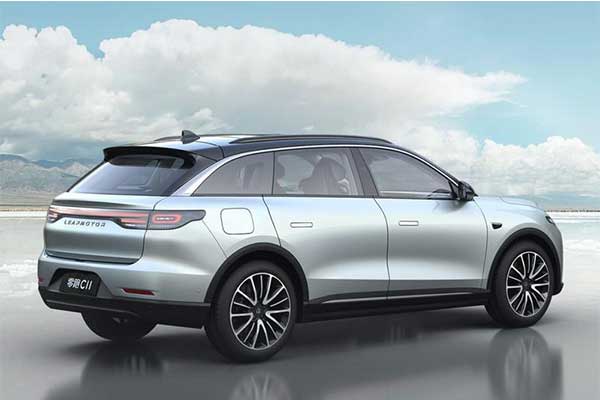
Following that stance, Stellantis bought a 21 percent stake in Chinese electric vehicle maker Leapmotor last October, which gave Stellantis access to Leapmotor technology and exclusive rights to manufacture their electric vehicles outside of China.
The challenges Stellantis faces in the EU and US are no different from those faced by all car manufacturers as they seek to compete with the Chinese on a global scale. However, Stellantis and a few others have taken it a step further, partnering with Chinese automakers to stay competitive. Thus, Stellantis produces Leapmotor electric cars in its Tihi factory in Poland together with models of well-known brands Fiat, Jeep and Alfa Romeo.
Tavares says Stellantis could also produce the Leapmotor in North America, but implementing the same strategy in Europe and the US is difficult because the regions have sharply different approaches to Chinese electric vehicles and technology.
Chinese electric vehicles are already being sold in Europe, and factories are being built that could make more with subsidies from individual countries competing for the factories. Also, unlike the US, European car manufacturers accept Chinese technology, so Volkswagen bought a stake in China’s Xpeng to jointly develop cheaper electric vehicles for the Chinese market. Many car experts see this as a blueprint for future partnerships.
“We believe that many of our competitors will turn to Chinese companies to use their platform globally,” Ford CEO Jim Farley said in July of this year, adding that the American automaker will instead develop its own EV technology.
Such partnerships are far more challenging in the United States. The Biden administration imposed a 100 percent tariff on Chinese-made EVs, championed American manufacturing through the $430 billion Inflation Relief Act, and targeted Chinese auto components.
The US government is now proposing to ban Chinese software and hardware in vehicles on US roads, which could be its most powerful weapon yet to block Chinese electric vehicles.
Stellantis could theoretically manufacture the Leapmotor in US facilities, but with non-Chinese parts and US wages, any savings could be minimal.








-

 Celebrities Auto1 week ago
From ₦9B Bugatti Chiron To Porsche 911 GT3 RS, 12 Impressive Cars In Burna Boy’s Multi-Billion-Naira Car Collection
-
 Celebrities Auto4 days ago
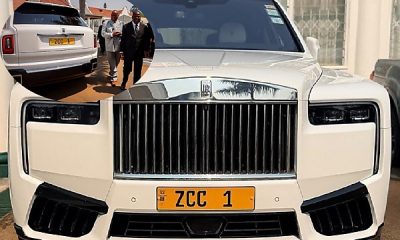
Billionaire Gifts Popular Bishop 2026 Rolls-Royce Cullinan And Over ₦370 Million Cash For Fuel
-
 News1 week ago
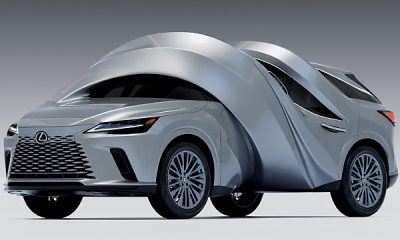
MOTOMORPHOSIS: MSCHF Transforms Lexus RZ 450e and RX 450h+ Into Bizarre Car Sculptures
-
 News5 days ago
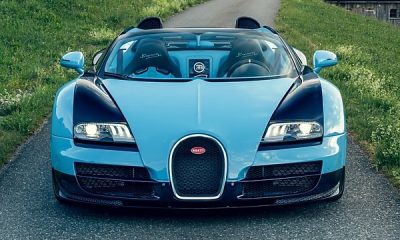
Rare Bugatti Veyron 16.4 Grand Sport Vitesse ‘Jean-Pierre Wimille’ Sells For Record $5.44M
-

 Celebrities Auto1 week ago
Sunday Igboho Spotted Driving Mercedes G-Wagon With Custom Nigerian Police Plate
-
 Celebrities Auto6 days ago
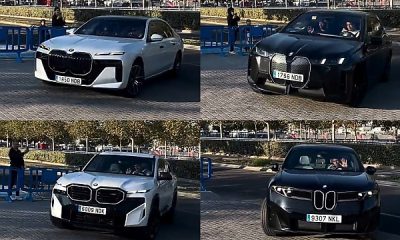
Kylian Mbappé, Real Madrid Stars Spotted Arriving For Training In BMW Cars — See Their Models
-
 Latest Cars1 week ago
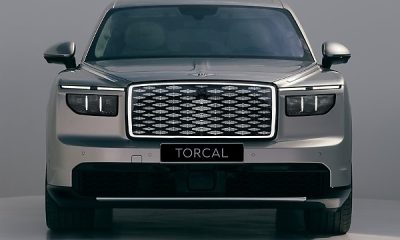
Bentley Unveils 2027 Torcal, Its First-Ever Electric Car With 888-hp, 600-Km Range
-
 News5 days ago
Top Luxury Car Brands 2026: Porsche Leads Brand Finance Ranking For 9th Consecutive Year


