
News
U.S Black Hawk Helicopter Flies For First Time Without Pilots On Board

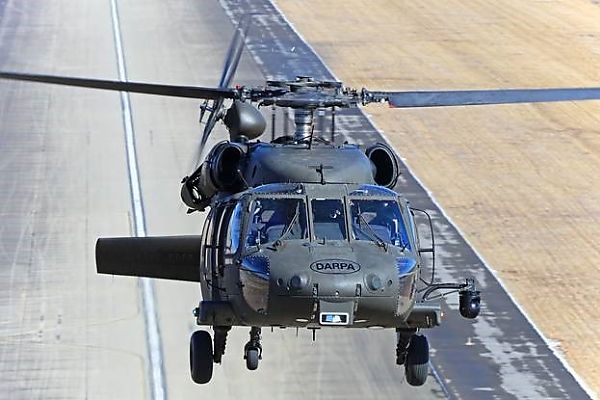
United States Black Hawk Helicopter flies for 30-minutes with no pilots on board for the first time.
It was fitted with an automated flying system, which allows it to be flown with two people, one person or no one.
The optionally piloted vehicle completed 30-minutes of uninhabited flight over the U.S. Army installation at Fort Campbell.
The Black Hawk, which usually requires two pilots, flew without no one on February 5th, and again on February 7th.
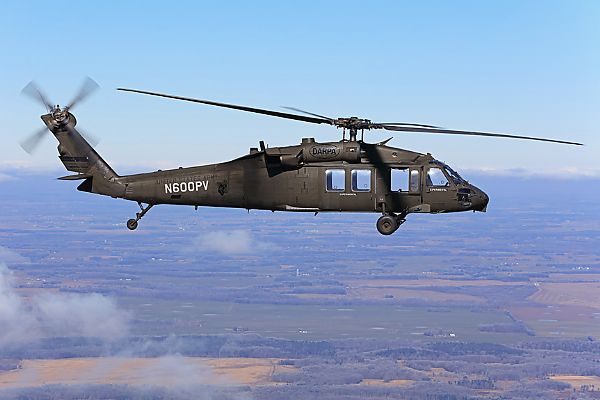
The U.S Defense Advanced Research Projects Agency (DARPA) and Sikorsky, a Lockheed Martin company, have flown a UH-60 Black Hawk helicopter with nobody onboard for the first time.
The Black Hawk, which usually requires two pilots, was fitted with Aircrew Labor In-Cockpit Automation System (ALIAS), which allows it to be flown with two people, one person or no one.
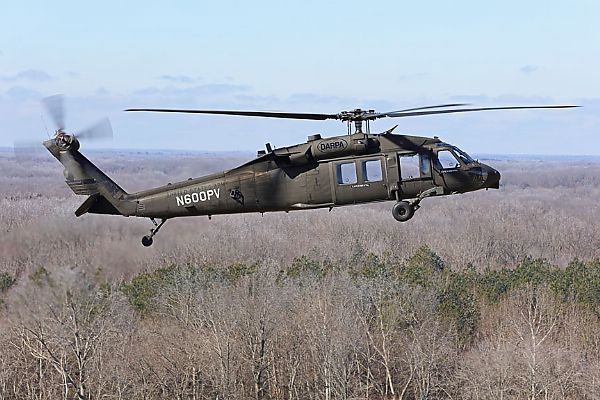
Sikorsky completed 30-minutes of uninhabited flight with the optionally piloted vehicle (OPV) over the U.S. Army installation at Fort Campbell, Kentucky on February 5th, and again on February 7th.
The Black Hawk was retrofitted with Sikorsky MATRIX autonomy technologies that form the core of ALIAS. This tech can change the way aviators and air crews execute their missions by providing assistance when flying with limited visibility or without communications.
-
See Also : Niger Governor Evacuated By Helicopter After His Convoy Got Stuck In Traffic On Abuja-Kaduna Highway
ALIAS, a flexible, extensible automation architecture for existing manned aircraft, provides a platform for integrating additional automation or autonomy capabilities tailored for specific missions.
“With reduced workloads pilots can focus on mission management instead of the mechanics,” said Stuart Young, program manager in DARPA’s Tactical Technology Office.
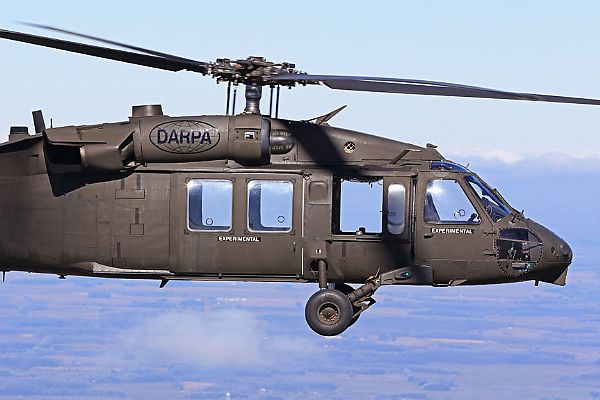
“This unique combination of autonomy software and hardware will make flying both smarter and safer.”
ALIAS aims to support execution of an entire mission from takeoff to landing, including autonomously handling contingency events such as aircraft system failures. Easy-to-use interfaces facilitate supervisor-ALIAS interaction.
“With ALIAS, the Army will have much more operational flexibility,” said Young.
“This includes the ability to operate aircraft at all times of the day or night, with and without pilots, and in a variety of difficult conditions, such as contested, congested, and degraded visual environments.”
The Army is currently exploring potential use cases for technologies such as ALIAS, including those outlined in the U.S. Army’s Future Vertical Lift (FVL) program.
-
See Also : Watch : DJ Cuppy Rides In Style In Helicopter To Watch Polo, Says It Is Faster Than Her ₦83m Ferrari

-

 Celebrities Auto1 week ago
Billionaire Gifts Popular Bishop 2026 Rolls-Royce Cullinan And Over ₦370 Million Cash For Fuel
-

 News1 week ago
China’s BYD Close To Overtaking Ford In European Sales
-
 News1 week ago
Next-Generation Ford Ranger Is In Development In Australia
-
 News1 week ago
Infiniti Wants People To See Its Cars But Not Its Technology.
-

 News1 week ago
Mercedes-Benz Like Volkswagen May Be Forced To Shut Down Two Factories
-

 News1 week ago
Mary Barra Of GM Earned $48.2 Million In 2025, Over Three Times The CEO Of Ford
-
 News1 week ago
The Classic Land Rover Defender Gets An Upgraded V8 Engine With Over 400 Horsepower
-
 News1 week ago
Tesla Delays The Second-Generation Roadster By 2 Weeks


