
News
Volkswagen Group Set To Sack Up To 50,000 Employees

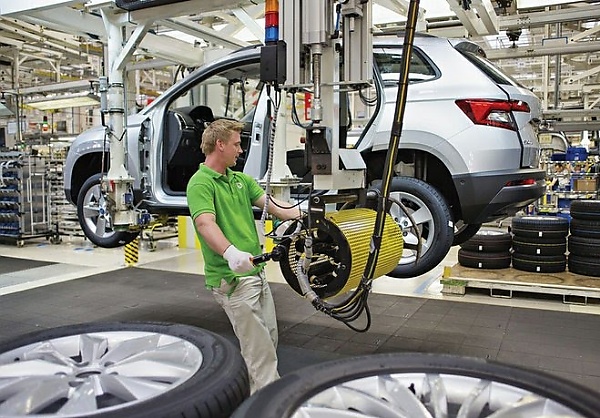
Volkswagen Group plans to eliminate around 50,000 jobs in Germany by 2030, after the company’s net profit in 2025 fell by 44 percent to 6.9 billion euros, which is the weakest result since the outbreak of the diesel scandal in 2015, reports Euronews today.
The company’s CEO, Oliver Blume, announced at the company’s headquarters in Wolfsburg that the cost-cutting will be extended, increasing the planned reduction in the number of employees compared to the previously agreed elimination of 35,000 jobs with the unions at the end of 2024.
The company’s revenues stagnated at around 322 billion euros, while the operating profit was almost halved to around 8.9 billion euros.
Financial director Arno Antlitz stated that the company is facing an “extremely demanding environment,” marked by geopolitical tensions, new trade barriers, and increasingly strong competition, especially from China. Special pressure on the business comes from the markets of China and the United States of America, while sales in Europe increased but not enough to offset the decline in those markets.
Volkswagen delivered approximately 8.98 million vehicles worldwide in 2025, a 0.5 percent decrease from the previous year.
The company also faces strong competition from Chinese manufacturers such as BYD, Geely, and Nio, which are rapidly increasing their market share and technologically closing the gap behind Western manufacturers.
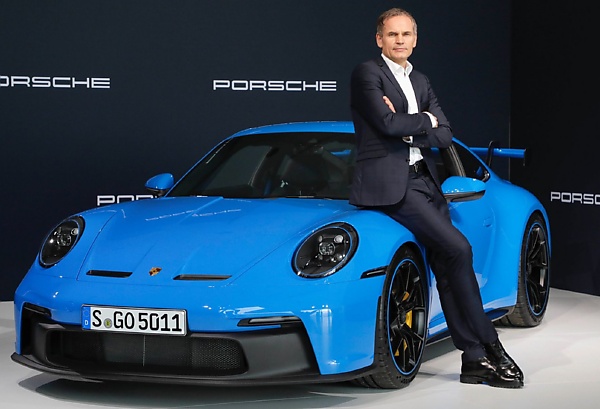
The problems have particularly hit the Porsche brand, whose sales in China have fallen sharply as the company shifts strategy and pivots back to models with internal combustion engines after a strong focus on electric vehicles.
Despite the sharp drop in profits, the company’s management still receives millions in bonuses. According to media reports, the total bonuses of the board members amounted to around 13.6 million euros, while Oliver Blume received around 7.4 million euros, slightly less than the year before. Employee representatives demand that workers receive a share of the company’s financial benefits, given the company’s strong cash flow, which reached 6.4 billion euros last year.
Despite the weak results, the company expects a recovery in 2026 and an operating margin growth of between four and 5.5 percent after falling to 2.8 percent in 2025.







-
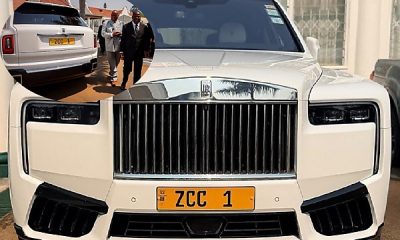
 Celebrities Auto1 week ago
Billionaire Gifts Popular Bishop 2026 Rolls-Royce Cullinan And Over ₦370 Million Cash For Fuel
-

 News1 week ago
China’s BYD Close To Overtaking Ford In European Sales
-
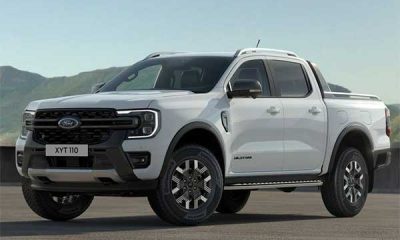
 News1 week ago
Next-Generation Ford Ranger Is In Development In Australia
-
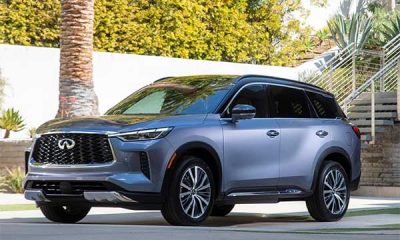
 News1 week ago
Infiniti Wants People To See Its Cars But Not Its Technology.
-
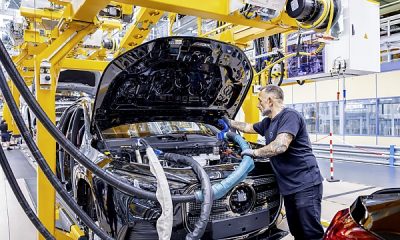
 News1 week ago
Mercedes-Benz Like Volkswagen May Be Forced To Shut Down Two Factories
-

 News1 week ago
Mary Barra Of GM Earned $48.2 Million In 2025, Over Three Times The CEO Of Ford
-

 News1 week ago
The Classic Land Rover Defender Gets An Upgraded V8 Engine With Over 400 Horsepower
-
 News1 week ago
Tesla Delays The Second-Generation Roadster By 2 Weeks


