
Auto Fun
Differences Between AWD And 4WD

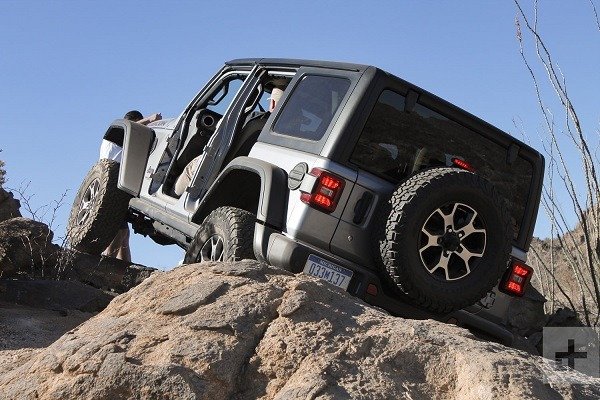
The wheel-drive of a car deals with how power is sent to the wheels of the car. If you think that 4WD and AWD are the same (just as most people do), you’ll be surprised to find out they are both separate entities.
Before we delve in to stating the differences between AWD and 4WD we see written on cars, we need to understand what they really mean. First of all, AWD stands for All-Wheel-Drive, while 4WD stands for 4-Wheel-Drive. They both have to do with traction and which wheels get power from the drivetrain. We are going to talk about them one after the other starting from 4WD.
Four-Wheel-Drive (4WD)
A car fitted with this four-wheel-drive often has ‘4WD’ displayed somewhere on the car, especially on the rear. 4WD system is designed to handle tough terrain. Rugged off-road trucks and SUVs such as Jeep Wrangler, Nissan Xterra, Mercedes Benz G-Class and the Toyota Land Cruiser use the 4WD system to overcome very rugged terrains. Power coming from the engine is sent equally across the tyres of the vehicle. This enables all wheels spin uniformly at constant rate.
This split of power across the four wheels makes maneuvering tough terrains easier. Most 4WD cars operates on just two-wheel mode until the 4-wheel-drive mode is mechanically actuated when it’s needed. This is achieved using a gear lever, knob or button as the case may be.
Going further in the technicalities of the 4WD, you’ll figure out some cars come with various modes which determines how it will work. We go deep in these technicalities.
All-Wheel-Drive (AWD)
AWD is often associated with cars that are not off-road such as sedans, crossovers, wagons and some SUVs. Unlike the 4WD, All-Wheel-Drive varies the amount of power sent to the wheels of a vehicle for maximum traction. Some of the cars with this All-wheel-Drive include Audi R8 which is a super car, Toyota Highlander, Honda CR-V and Toyota RAV4.
With the help of sensors on each wheel that monitor traction and wheel speed, an engine control unit (ECU) analyzes traction conditions and decides which wheel receives power.
A true All-Wheel-Drive does not require any driver intervention to function effectively. It is automatically actuated when power is needed to be sent to the various tyres at varying speed.
At this point, you have the knowledge of what 4WD and AWD are. We now have to proceed with stating the differences between the two.
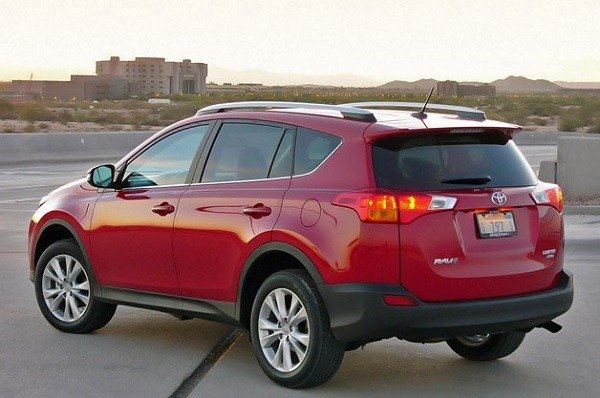
Differences between Four-Wheel-Drive and All-Wheel-Drive
1. 4WD is actuated using a switch, lever or knob while AWD is automatic and permanently engaged at all time.
2. 4WD is robust and more complex that the AWD.
3. 4WD are mostly fitted in rugged and off-road SUVs while AWD is used in sedans, crossovers, wagons and some SUVs.
4. AWD is mostly used in performance cars other than the 4WD.
5. AWD is safer to use than the 4WD.
6. Cars fitted with AWD has better acceleration than that of those fitted with 4WD.











-

 Celebrities Auto1 week ago
Throwback: When KC Luxury Boasted Of Being The Only Person In The World To Own Two Rare Mercedes-Maybachs
-

 Celebrities Auto1 week ago
Inside KC Luxury’s Car Collection: From A ₦2.5B Brabus 800 Adventure XLP To Alicia Keys’ Former Maybach
-

 News5 days ago
Andrew Tate’s Lawyers Claim His Famous Bugatti And Aston Martin Are Rented
-

 News1 week ago
Who Is Herbert Wertheim? The 87-Year-Old Billionaire Who Bought The $40M Ferrari Luce “Chassis 0”
-

 News1 week ago
The Tesla Cybercab Has Begun Transporting Passengers In Austin Texas
-

 News2 days ago
1997 Cadillac DeVille d’Elegance: Why Dolly Parton Donated Her Favorite Car After 10 Years
-

 Car Theft18 hours ago
Oyo Police Bust Trans-National Car Theft Syndicate, Recover Stolen Lexus RX 350
-

 Celebrities Auto3 days ago
Burna Boy Lifts ₦1.6B Ferrari Testarossa Into His 26th Floor Penthouse