
News
Honda Demanded That Nissan Stop Using Its e-Power System

As is known, Honda and Nissan broke off merger talks last week, less than two months after agreeing to explore the possibility of creating a new holding company, which would be launched in 2026.
Now, details are starting to emerge about the reasons for the dropout. The two Japanese manufacturers had disagreements on two main topics. We previously reported that Honda practically wanted to merge with Nissan, but that’s not all.
According to Japan News, the English-language edition of the well-known daily Yomiuri Shimbun, Honda has demanded that Nissan abandon its hybrid system. This unusual request would have involved the latter company adopting Honda’s solution. The proposal has been met with fierce opposition, further widening the gap between the two parties. Although a merger is not going to happen, Honda and Nissan will continue to cooperate in the field of electrified cars.
Nissan is continuing with its e-Power system, preparing its third generation. As announced last week, the next generation will be 20 percent more efficient than the original setup launched in 2016. It is also projected to be 15 percent more fuel-efficient on highways compared to the current, second-generation system. Nissan aims to cut costs by a fifth compared to the original solution, which originally found its home in the Note hatchback.
Nissan To Continue With Its e-Power
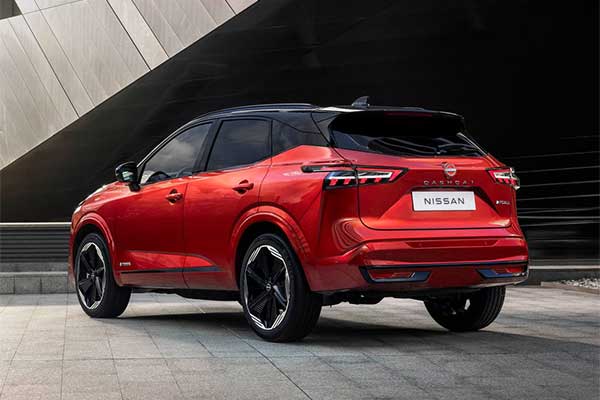
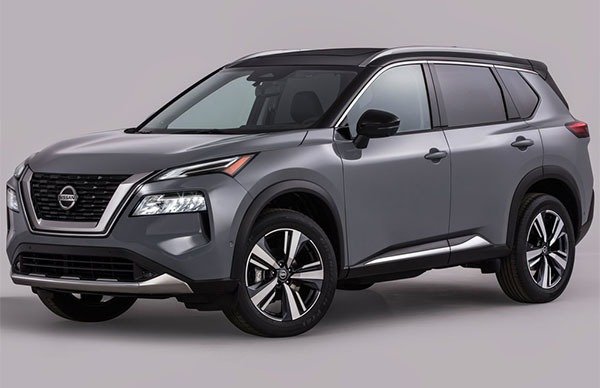
The Japanese automaker will finally launch a hybrid model with the new technology in the US, in the Rogue e-Power model, between April 1, 2026, and March 31, 2027. Meanwhile, the plug-in hybrid Rogue (known in Europe as the X-Trail) arrives later this year. On the other hand, the Qashqai in Europe and the minivan model in Japan will also adopt the third-generation e-Power system during the same period.
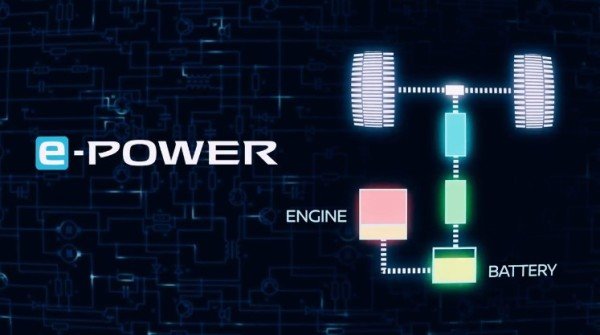
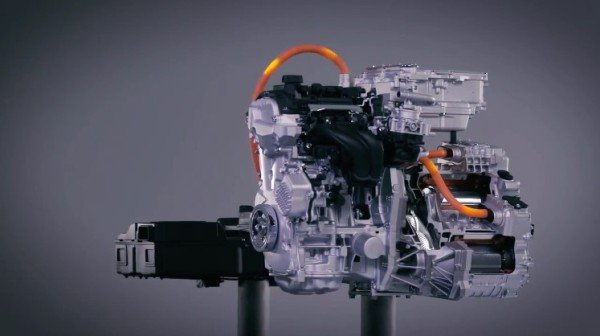
e-Power is not a conventional hybrid system. The gasoline engine is not connected to the wheels; instead, it functions as a generator to charge the battery that powers the electric motor. As a result, Nissan claims that e-Power operates like an electric vehicle.
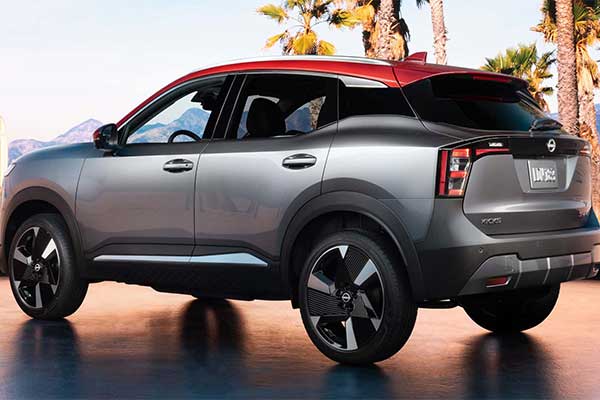
Since the launch of the Note e-Power, several models have adopted this hybrid technology, including the Kicks, Qashqai, X-Trail, and the Sylphy sedan in China. Mazda’s MX-30 hybrid uses a rotary engine as a generator. The company has also hinted at a sports car with the Wankel engine, which would also function as a generator, similar to the SP concept.
Honda is advancing its hybrid system with the new e:HEV models, featuring 1.5- and 2.0-litre direct-injection gasoline engines on the Atkinson cycle. These larger hybrids offer a 10 percent boost in fuel economy and are nearly 100 kilograms lighter than current models. By 2027, production costs for the next-generation hybrid are expected to drop by 50 percent compared to 2018 models, with a 25 percent reduction already achieved for the Accord hybrid in North America.







-
 Celebrities Auto6 days ago
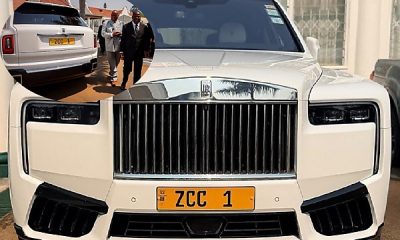
Billionaire Gifts Popular Bishop 2026 Rolls-Royce Cullinan And Over ₦370 Million Cash For Fuel
-
 News1 week ago
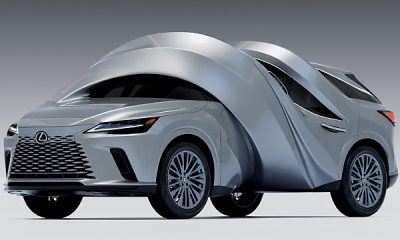
MOTOMORPHOSIS: MSCHF Transforms Lexus RZ 450e and RX 450h+ Into Bizarre Car Sculptures
-
 News1 week ago
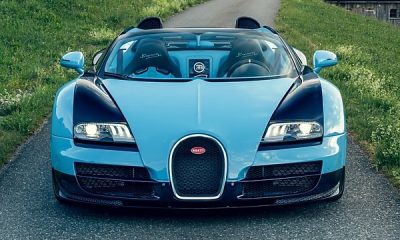
Rare Bugatti Veyron 16.4 Grand Sport Vitesse ‘Jean-Pierre Wimille’ Sells For Record $5.44M
-
 Celebrities Auto1 week ago
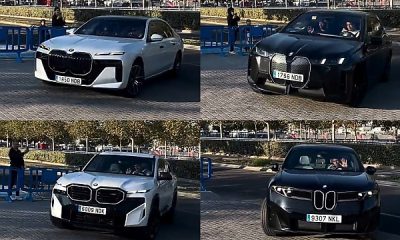
Kylian Mbappé, Real Madrid Stars Spotted Arriving For Training In BMW Cars — See Their Models
-
 Latest Cars1 week ago
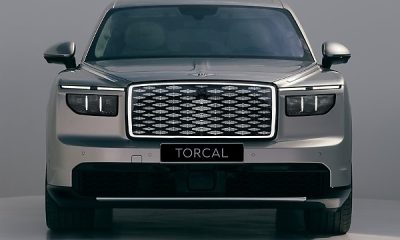
Bentley Unveils 2027 Torcal, Its First-Ever Electric Car With 888-hp, 600-Km Range
-
 News1 week ago
Top Luxury Car Brands 2026: Porsche Leads Brand Finance Ranking For 9th Consecutive Year
-
 Autoshows & Awards1 week ago
Mercedes-Benz GLC, China’s Xpeng X9 Lead Winners Of 2027 German Car Of The Year Awards
-
 News1 week ago
Toyota Is Preparing It’s First Ever Extended-Range EV For The Chinese Market


