
News
In Germany, Mercedes “Threatens” Low-Number Employees: Romanian Production Is 82 Percent Less Expensive.

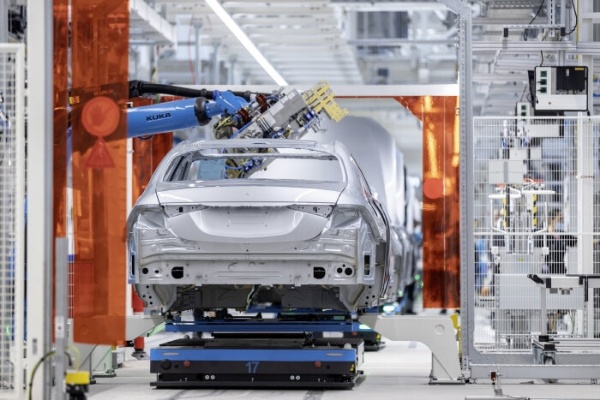
The German auto industry is going through a very difficult period, and even the biggest ones like Mercedes are not untouchable. The penetration of Chinese brands exposes the business model, as well as the car production system, which is far from the best in the world.
Mercedes, like other manufacturers, began to reduce costs, showing employees how much production costs in Romania and thus indirectly “threatened” them that, if costs in Germany continue to rise, part of the production could be redirected to countries with lower costs.
German industry was convinced that its business model was created to be studied at the best business schools, but it turned out not to be so. What is being studied now is how to overcome the crises in which they find themselves. Those crises are increasingly exacerbated by factors such as electric cars and the penetration of Chinese brands.
All German manufacturers are forced to implement cost-cutting plans in almost all business segments, even reducing the number of models on offer, the number of versions and equipment levels. However, there is something they struggle with much more: labor costs. Manufacturers offer unions two options: pay cuts or layoffs. The choice is theirs.
Mercedes turns the meeting into a veiled threat
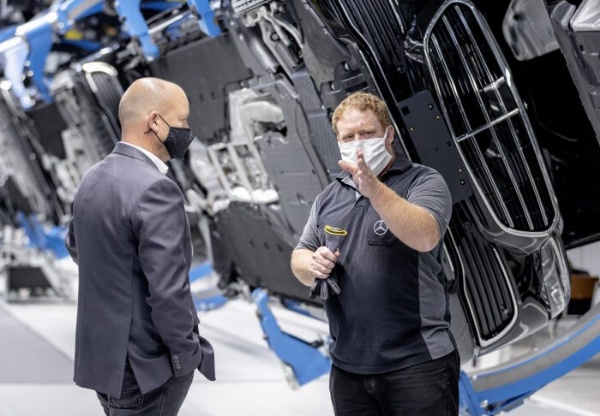
Mercedes-Benz chose a different approach. The three-pointed star manufacturer is demanding wage cuts from its employees in Germany and is using a new pressure tactic: showing slides comparing labor costs at its factories with those in Romania, Hungary and Poland.
Production there is up to 82 percent cheaper. The management negotiates longer working hours without raising wages, while the possibility of moving production abroad is used as a threat.
On September 8, Olaf Schick, the Mercedes group’s adviser responsible for integrity, corporate governance and sustainability, appeared before a gathering of employees in Germany with material that usually stays in offices: slides detailing employee costs by plant, comparing German plants with their counterparts in Eastern Europe and the United States.
The source, who had access to a series of photos of the slides made during the meeting, points out that the figures leave no room for ambiguity: production in Romania is 81.7 percent cheaper than in Germany. In Poland, the difference is 76.5 percent, and in Hungary it is more than 70 percent. Each hour of work in a German factory can cost four or five times more than in these countries.
The fact that a member of management presents these figures directly to employees, and not only through internal reports or meetings with investors, is an unusual but very calculated move. Amid talks with the works council and the IG Metall union, Mercedes is showing its cards to make clear what is on the table if no deal is reached.
What Mercedes is looking for and what it threatens if it doesn’t get it
According to the same report, management’s proposal is anything but subtle: restoring a 40-hour workweek instead of the current 35 hours, with no extra pay for those five extra hours. Cuts to Christmas bonuses and holiday pay are reportedly also on the table.
If workers’ representatives reject the package, Mercedes is suggesting an unpleasant alternative: building a new factory in Eastern Europe and closing some of its German plants. The group’s CFO, Harald Wilhelm, explained that there are no concrete plans to close factories, although he admits that production capacity in Germany will fall by around 100,000 vehicles by 2028.
Numbers create pressure.
The financial situation does not help the German company to defend its position. In the second quarter of 2026, the margin of Mercedes’ business with passenger cars fell to four percent, global sales decreased by eight percent, while in China, their most important market until recently, the decline amounted to about 30 percent.
The most profitable segments suffer the most: S-Class sales in China fell by 46 percent, and sales of AMG models by 33 percent.
What makes the move particularly sensitive is the way it’s being implemented: showing internal employee cost data directly to workers, rather than sharing that data only between management and unions, is being interpreted as overt pressure.
IG Metall and the workers’ council have already called this move a “threat” and believe that Mercedes is using the relocation of production abroad as a bargaining chip rather than a real and immediate plan.











-

 Car Theft5 days ago
Fear Of Theft: Indian Man Hires Crane To Park New Mahindra SUV On Rooftop Before Traveling To Israel
-
 News1 week ago
Mercedes-AMG CLE 646 Spezialanfertigung: Sold-Out 646-HP Collector’s Item Limited To Just 30 Units
-

 Business1 week ago
Mate Rimac Becomes Bugatti President Following Porsche’s Exit
-

 Celebrities Auto1 week ago
Is This Asake’s New Ride? Inside the 1,001-HP Lamborghini Revuelto Venuum Voltoro V1 Spotted With Giran Republic Branding
-

 Celebrities Auto1 week ago
Karim Benzema Shows Off New $740,000 Ferrari 12Cilindri and $800,000 Lamborghini Revuelto
-

 News1 week ago
Chevrolet Silverado EV Remains For 2027 With A Subtle Update
-

 News1 week ago
Aston Martin AMB 002 Roadster Unveiled With 130 HP, Limited To 300 Units And Priced At €120,000
-

 News6 days ago
BMW iX5 Hydrogen Enters Real-World Testing Ahead Of Production, Targets 750km Range, 5-Minute Refuelling Time