
News
Hyundai CEO Warns US Must Maintain Trade Protection Against China

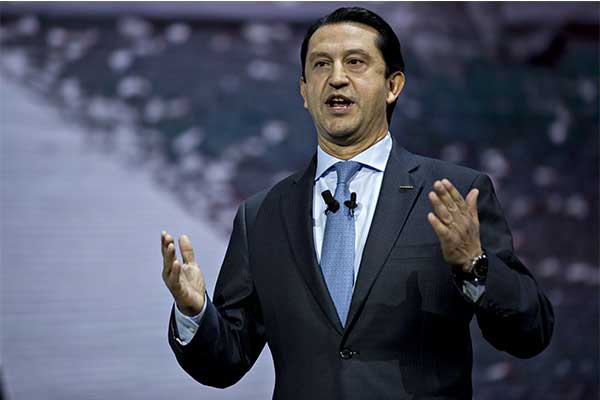
Hyundai CEO Jose Munoz warned that the US must maintain trade protections to counter the competitive threat from Chinese automakers.
He warned that the U.S. must maintain trade protections against Chinese automakers, citing their ability to undercut competitors by 30% to 40% even under existing European tariffs. He cautioned that without strict regulations, the U.S. market risks experiencing the same profit erosion and market dominance seen in Britain.
The United Kingdom serves as a cautionary tale regarding the absence of trade safeguards. Following its exit from the EU in 2020, the country declined to mirror Brussels’ tariff policies, leading to a significant shift in market dynamics. As Hyundai CEO Jose Munoz observed in an interview with Reuters, the UK market, once robust and highly profitable, has been saturated by Chinese-branded vehicles due to the lack of restrictive trade barriers.
Current data supports this assessment: while Chinese-branded cars accounted for over 9% of EU sales in the first half of the year, according to the European Automobile Manufacturers’ Association, that figure reached 15% of new registrations in Britain, as reported by the Society of Motor Manufacturers and Traders.
Munoz is not advocating for a complete exclusion of Chinese automakers. Instead, he urges Washington to implement specific conditions on Chinese market entry to mitigate adverse economic impacts, while candidly acknowledging that some degree of market disruption is inevitable. Ford CEO Jim Farley has expressed similar concerns, suggesting that Chinese brands could feasibly establish a significant presence in the U.S. within five to ten years—a sentiment shared across the industry as automakers like Honda navigate China’s increasing influence in the global supply chain.
Beyond his remarks regarding China, Mr Munoz addressed the development of Hyundai’s proprietary Level 2++ driver-assistance system, confirming that the company requires additional time for data collection and rigorous safety validation before the technology is released to the market.
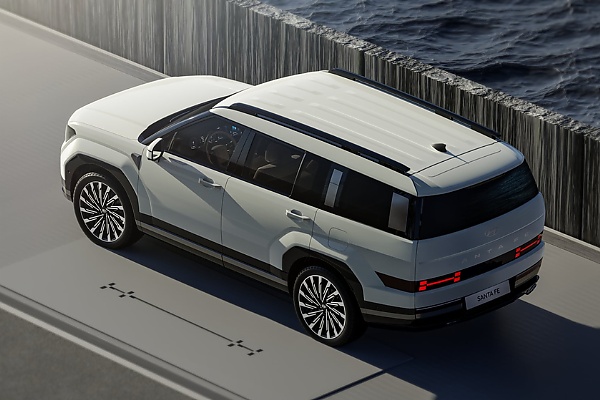
Hyundai has delayed its Tesla-rivaling driver-assistance system from 2027 to 2029 to prioritize safety validation. This shift coincides with the company’s aggressive U.S. manufacturing expansion, aiming to increase North American capacity by 500,000 units and domestic parts sourcing to 80% by 2030. CEO Jose Munoz notes that existing U.S. trade policies, like those supporting the Alabama-built Santa Fe, remain vital to this localization strategy.
-
See Also: The U.S. Model Hyundai Venue Has No New Improvements, And An All-New Model Isn’t Coming Soon







-
 Celebrities Auto5 days ago
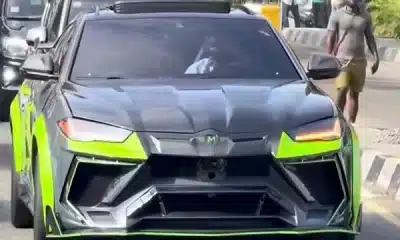
Is OGB Recent’s “Mansory Lamborghini Urus” Genuine? Auto Spotters Raise Questions
-
 Car Comparison1 week ago
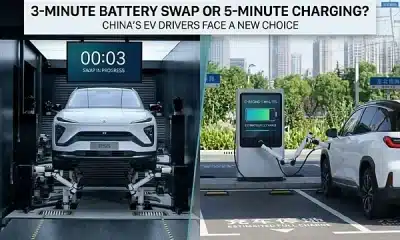
3-minute Battery Swap Or 5-minute Charging? China’s EV Drivers Face A New Choice
-

 Auto Fun1 week ago
Cadillac F1 Driver Bottas Swaps Short Flight For Epic 420km Bike Ride From Malaysia To Singapore
-
 Latest Cars1 week ago
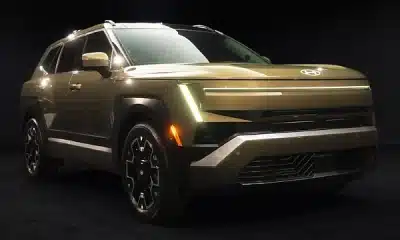
All-New 2027 Hyundai Tucson Unveiled With Bolder Design, Hybrid Power And New Tech
-

 News6 days ago
F1: Verstappen Takes First Win In Singapore, Antonelli One Step Closer To Title
-
 News1 week ago
The Next-Generation Mazda BT-50 Is In Development Phase
-

 News1 week ago
Amalgamated Megacity Transport Services Launches In Lagos With 50 CNG-Powered Buses
-
 News1 week ago
The EU Is Preparing A New Discussion! Petrol (And Diesel) Will Get Even More Space?!