
Car Facts
Recent Study Shows That Touchscreens In Cars Are Dangerous

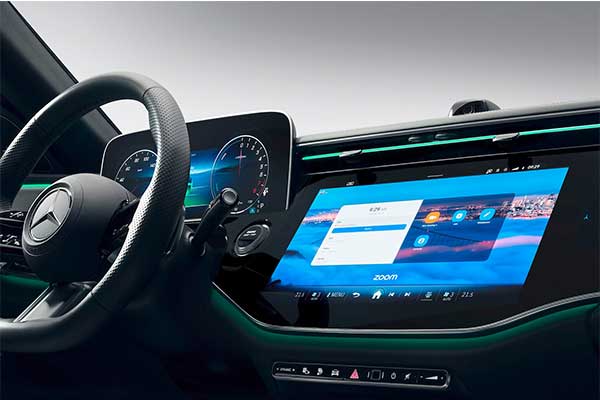
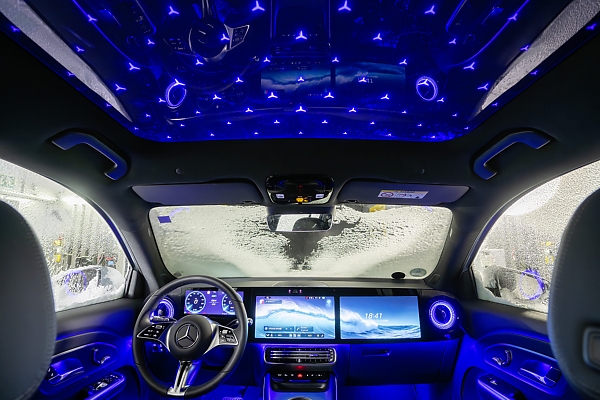
Touchscreens have become a central element of car interiors in recent years. From multimedia and navigation to climate and security settings, it is increasingly moving to digital menus. Manufacturers like to tout such an approach as a technological advance, but new research shows that the price of that trend may be safety.
The study was conducted by the University of Washington, the Toyota Research Institute, and the results were published in a scientific journal dedicated to user interfaces. The researchers wanted to quantify what drivers have long instinctively felt: that using a touchscreen while driving seriously impairs the ability to control the vehicle.
The research involved 16 subjects who drove in a highly realistic simulator, while at the same time they had to perform common tasks via the central screen, such as changing music, managing messages, or adjusting settings. Scientists monitored eye and hand movements, pupil dilation, and skin changes associated with stress and mental strain.
The results were very clear. As soon as the attention shifts to the screen, the precision and speed of handling the vehicle drop by more than 50 percent, while at the same time, the quality of the ride noticeably weakens. Lane departures increased by more than 40 percent, and driver reactions became slower and more uncertain. It is important to stress the basic functions that manufacturers expect to be used while driving, and not about extreme distractions like typing messages.
The key problem is not only that the screen demands a glance but also the cognitive load. Actions that were once performed “by heart” with one turn of a button today require visual inspection, menu reading, and decision-making. Eyes, hands, and the brain are overloaded at the same time.
The researchers are not calling for a full return to analogue controls, aware that screens are cheap, flexible, and attractive to manufacturers. Instead, they propose more concrete solutions, such as placing frequently used functions in a clearly accessible place on the screen, larger and clearer virtual buttons, and a system that recognizes the high mental load of the driver and temporarily limits secondary functions.







-

 Celebrities Auto6 days ago
Billionaire Gifts Popular Bishop 2026 Rolls-Royce Cullinan And Over ₦370 Million Cash For Fuel
-
 News1 week ago
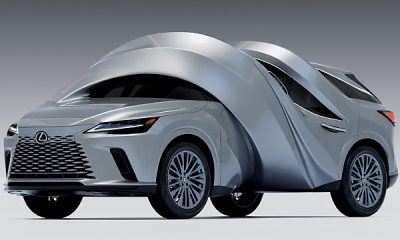
MOTOMORPHOSIS: MSCHF Transforms Lexus RZ 450e and RX 450h+ Into Bizarre Car Sculptures
-
 News7 days ago
Rare Bugatti Veyron 16.4 Grand Sport Vitesse ‘Jean-Pierre Wimille’ Sells For Record $5.44M
-
 Celebrities Auto1 week ago
Kylian Mbappé, Real Madrid Stars Spotted Arriving For Training In BMW Cars — See Their Models
-
 Latest Cars1 week ago
Bentley Unveils 2027 Torcal, Its First-Ever Electric Car With 888-hp, 600-Km Range
-

 News1 week ago
Top Luxury Car Brands 2026: Porsche Leads Brand Finance Ranking For 9th Consecutive Year
-
 Autoshows & Awards1 week ago
Mercedes-Benz GLC, China’s Xpeng X9 Lead Winners Of 2027 German Car Of The Year Awards
-
 News1 week ago
Toyota Is Preparing It’s First Ever Extended-Range EV For The Chinese Market


