
News
VW AG And Stellantis Reveals Plans To Save The EU Auto Sector

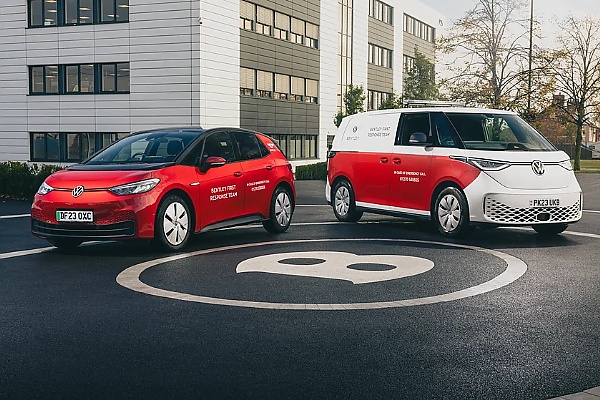
Not a day passes without an association or manufacturer asking the European Commission for concrete measures to save the market and the automotive industry of the Old Continent. Now it is the turn of Antonio Filosa and Oliver Blume, CEOs of Stellantis and Volkswagen Group, who revealed their idea in an open letter published in Sole 24 Ore.
Filosa and Blume start by thinking about batteries to expand the concept to the whole market:
“Our companies have always produced cars for Europeans. Nine out of ten vehicles we sell in the EU are produced here. However, our European business faces competition from importers who operate in less strict regulatory and social conditions compared to the EU.
Batteries are the most obvious example of Europe’s strategic dilemma. We invest billions in their production. As Europeans, we must master and produce this key technology ourselves along the entire chain.
At the same time, our European customers rightly expect us to deliver as many affordable electric vehicles as possible, which is a basic requirement for the success of electric mobility. But the lower the price of the car, the greater the pressure to import as many cheap batteries as possible.”
From this arises the issue of costs: production in Europe is expensive, and in order to reduce the prices of electric cars, one should turn to those that enable savings. Yes, to the Chinese.
A vicious circle that, according to the two managers, can be broken with the ‘Made in Europe’ strategy.
“The right answer is the ‘Made in Europe’ strategy, based on two simple principles. First, everyone who sells vehicles to European customers should produce them under similar conditions. This guarantees fair competition. Second, European taxpayers’ money should be used in a targeted way to encourage European production and attract investment in the EU.”
Cars manufactured in Europe, marked with a special label, could benefit from national incentives and preferential conditions in public tenders. Not Trump-style, tariff-driven protectionism, but a path that values the European auto industry, protecting its survival and jobs. Its importance for Europe is strategic, as it accounts for 8 percent of the Union’s GDP.
Another point to encourage car production on the old continent would be the CO₂ bonus:
“Every ‘Made in Europe’ electric vehicle should receive a CO2 bonus. And if a manufacturer fulfills the ‘Made in Europe’ requirements for a significant part of its fleet, that CO2 bonus should also be recognized for all its electrified vehicles.”
In this way, according to Filosa and Blume, manufacturers would be additionally motivated to keep production in Europe, avoiding the payment of high fines and enabling the investment of those funds in research and development.
Now it’s up to Brussels, which recently slightly reduced its emissions targets for 2035.








-

 Car Theft5 days ago
Fear Of Theft: Indian Man Hires Crane To Park New Mahindra SUV On Rooftop Before Traveling To Israel
-
 News1 week ago
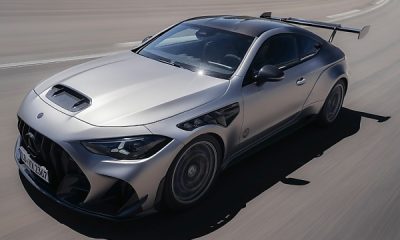
Mercedes-AMG CLE 646 Spezialanfertigung: Sold-Out 646-HP Collector’s Item Limited To Just 30 Units
-

 Business1 week ago
Mate Rimac Becomes Bugatti President Following Porsche’s Exit
-

 Celebrities Auto1 week ago
Is This Asake’s New Ride? Inside the 1,001-HP Lamborghini Revuelto Venuum Voltoro V1 Spotted With Giran Republic Branding
-

 Celebrities Auto1 week ago
Karim Benzema Shows Off New $740,000 Ferrari 12Cilindri and $800,000 Lamborghini Revuelto
-
 News1 week ago
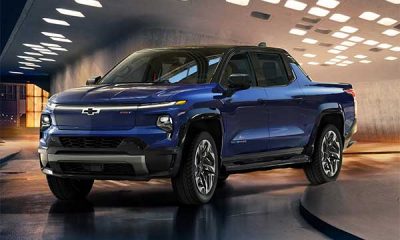
Chevrolet Silverado EV Remains For 2027 With A Subtle Update
-
 News1 week ago
Aston Martin AMB 002 Roadster Unveiled With 130 HP, Limited To 300 Units And Priced At €120,000
-
 News6 days ago
BMW iX5 Hydrogen Enters Real-World Testing Ahead Of Production, Targets 750km Range, 5-Minute Refuelling Time