
News
Following A Prosperous 2025, Ferrari Employees Will Get A Bonus Of 14,900 Euros

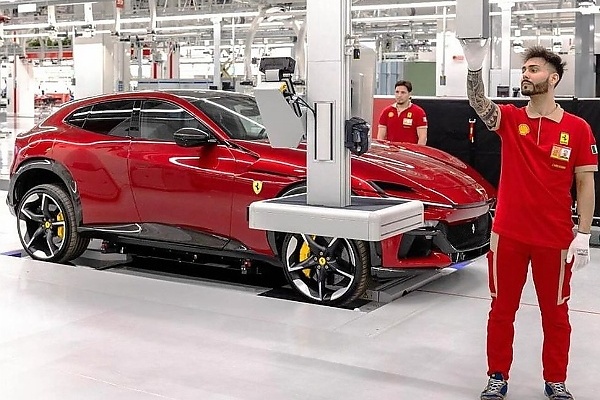
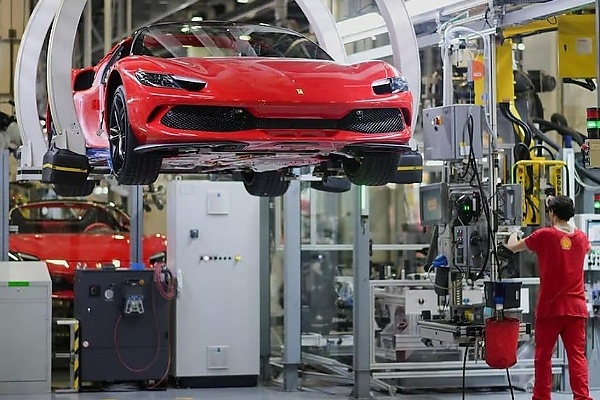
Ferrari didn’t set a sales record last year, but it wasn’t far off. With 13,640 vehicles delivered to customers, it missed matching its 2024 tally by just 112 cars. However, a carmaker’s success isn’t measured solely by the number of vehicles it sells each year. Since Ferrari makes some of the most expensive cars on the market, profit margins are crucial to the company’s performance.
Despite selling fewer cars in 2025, Ferrari made more money than the year before. Net income rose seven percent to 7.1 billion euros, while operating profit jumped 12 percent to 2.1 billion euros. The company’s employees are now cashing in on the success of the “Praised Horse” with record annual bonuses.
Speaking to the media during the company’s fourth-quarter earnings conference call, Ferrari CEO Benedetto Vignola revealed that employees in Italy are entitled to an annual competitive bonus of up to €14,900. That’s enough to buy a new car, ideally a Stellantis like the Fiat Grande Panda (priced at €14,950 in Italy) to keep the money “within the family.” The company employs about 5,000 people in Italy.
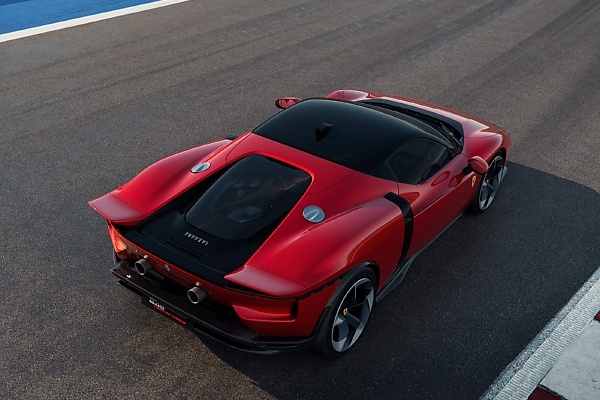
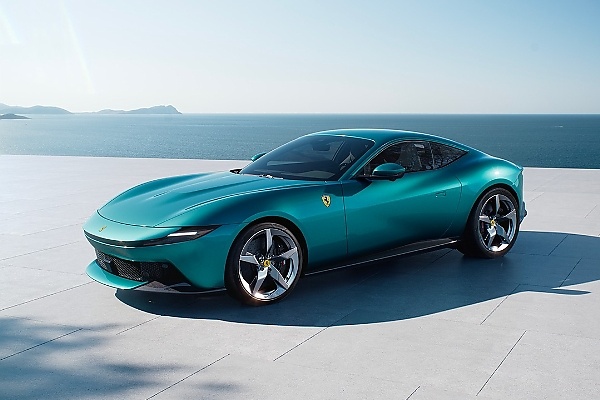
Ferrari is optimistic about the future. It has already sold out its production for 2026, and its order books are almost full for 2027, the CEO revealed. Several new models are in the pipeline, including the electric Luce, which will debut this year along with four other vehicles. At least 20 new cars are due by the end of 2030.
Even though Luce is making changes at Maranello, 80 percent of Ferrari’s models will still have an internal combustion engine by the end of the decade. The company estimates that internal combustion cars will account for 40 percent, hybrids another 40 percent, and electric vehicles the remaining 20 percent.
Ferrari believes that ICEs have not yet reached their peak and will continue to modernize their V6, V8, and V12 engines to provide better performance while meeting increasingly stringent emissions regulations.
Offering a wide range of models with internal combustion engines alongside the inaugural electric car should satisfy most buyers, at least those who can afford a new Ferrari. It’s safe to assume that the Purosangue will eventually get a plug-in hybrid configuration with a smaller engine, while another model with a “pure” internal combustion engine is also a safe option.







-

 Business1 week ago
Dangote Cement Rewards Top Distributor With New 2026 Lexus LX700h Worth Over ₦400 Million
-

 Celebrities Auto3 days ago
Inside KC Luxury’s Car Collection: From A ₦2.5B Brabus 800 Adventure XLP To Alicia Keys’ Former Maybach
-

 News6 days ago
Mansa Fulfills Challenge: TikTok Star Peller Gifted ₦300 Million Mercedes-Benz G-Wagon
-
 News5 days ago
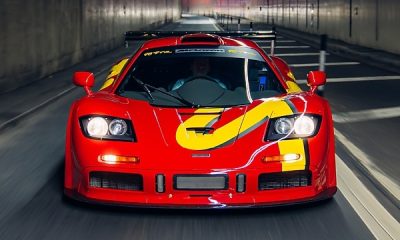
Ultra-Rare, Centre-Driving McLaren F1 GTR Fetches Record $34.6 Million At Auction
-
 News5 days ago
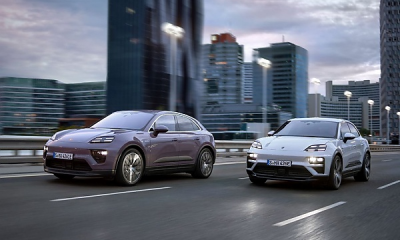
Porsche And Chinese Company Xpeng Collaborate To Lower Average Emissions In Europe
-

 Celebrities Auto15 hours ago
Throwback: When KC Luxury Boasted Of Being The Only Person In The World To Own Two Rare Mercedes-Maybachs
-

 Auto Sport1 week ago
Tractor Maker’s JCB Hydromax Sets New 406-mph World Land Speed Record For A Hydrogen-powered Vehicle
-

 News5 days ago
“Wike Carry ‘Rivers’ Come Abuja”: Citizens React As Flash Floods Submerge Luxury Vehicles