
News
How Regenerative Braking Works

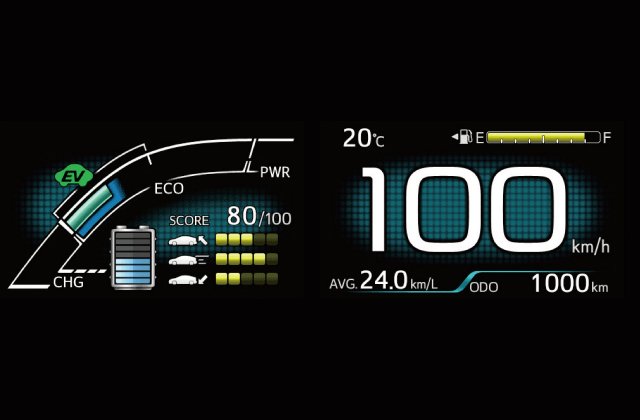

What Is Regenerative Braking?
Regenerative braking is a method of getting back the energy lost during braking and storing it as electricity in the battery.
It converts the motion (kinetic energy) of your car and returns it as electrical power to the vehicle,increasing its efficiency.
Regenerative braking (sometimes shortened to regen) is used in all of the hybrid and battery-electric cars plus a few petrol only powered cars.
How Does It Work?
In a conventional car,a tremendous amount of energy is wasted by the braking system. When you put your foot on the brake,the surface of the brake is pushed against the hub’s spinning disk or drum.Disc and drum brakes do a fine job of stopping the car,but all of the kinetic energy of your car’s momentum is irrecoverably lost to heat from friction.
Electric and hybrid vehicles drive the wheels with an electric motor or multiple motors. When you start to coast,each motor instantly becomes an electrical generator,working to capture the car’s kinetic energy.Operating as generators,they both create a drag on the wheels they’re attached to and start producing electricity.
As soon as you depress the brake pedal,the generator is told to increase its power generation,which in turn causes even more resistance,slowing the car.
The electricity generated flows back to the battery pack,where it’s available to help accelerate the vehicle,or power its systems.
When you press the accelerator,the battery provides electricity to turn the motor,which turns the wheels.
When you take your foot off the gas,or apply the brakes,this process goes into reverse.
Battery—->Wheels
Battery<—-Wheels
Electricity to the motor is cut and instead the wheels transfer their kinetic energy to the motor,essentially transforming it into a generator to send electricity back to the battery.
Regenerative braking work better at certain speeds than at others.They’re most effective in stop-and-go driving situations.So hybrids and fully electric cars also have friction (standard) brakes,as a kind of back-up system in situations where regenerative braking simply won’t supply enough stopping power.
https://cars.usnews.com/cars-trucks/what-is-regenerative-braking
See Related Post 7 Facts You Need To Know About Anti-lock Brake System (ABS)
Download Our Android App Today… https://play.google.com/store/apps/details?id=com.donald.autojosh&hl=en
Check import duty for over 5,000 cars in Nigeria.. https://autojosh.com/import-duty/








-
 Celebrities Auto6 days ago
Swedish Soccer Icon Zlatan Ibrahimovic Buys $4 Million Ferrari F80 For 45th Birthday (Photos)
-

 News7 days ago
Who Owns Who? World’s Largest Automakers And The Car Brands They Currently Control
-

 Celebrities Auto1 week ago
Kizz Daniel Flaunts Car Collection With ₦1.6bn Ferrari Purosangue, Rolls-Royce Cullinan & Mercedes G-Class
-

 News2 days ago
Carloha Goes “The Extra Mile” To Redefine Vehicle Ownership Experience In Nigeria
-

 News1 week ago
Uber CEO Tests Driverless Verne Robotaxi Ahead Of Steering-Wheel-Free Global Rollout
-

 News1 week ago
Korope Bus Driver Pleads For Mercy After Crashing Into ₦450M Lamborghini Urus In Lagos
-

 News5 days ago
Porsche Will Fit A Petrol Engine In The Macan Again In 2028
-
 News6 days ago
‘Temu Range Rover’ Jaecoo 7 Tops UK Car Sales In September As Chinese Brands Continue Their Global Rise


Dapson
September 13, 2017 at 10:14
Amazing ! just learnt something new…Great work you doing ..