
News
3,000 Jobs At Risk In Sweden As Volvo Ends Petrol And Plug-In Hybrid Vehicles

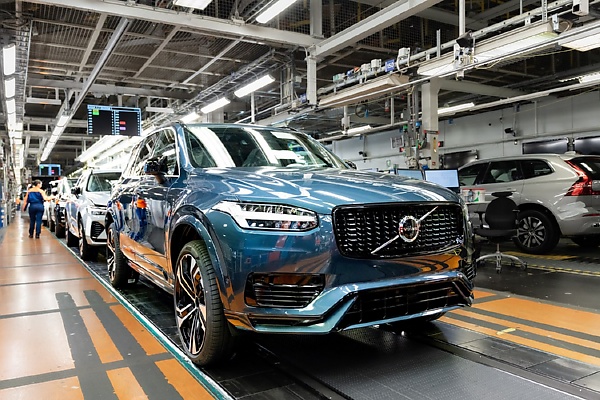
The media in Sweden state that they were influenced by the Chinese owners, and the trend is becoming clearer: less and less development and design remains in Sweden, and more and more Geely Group solutions are used, while the production of new models is gradually moving from Sweden, especially to China, North America, and Slovakia.
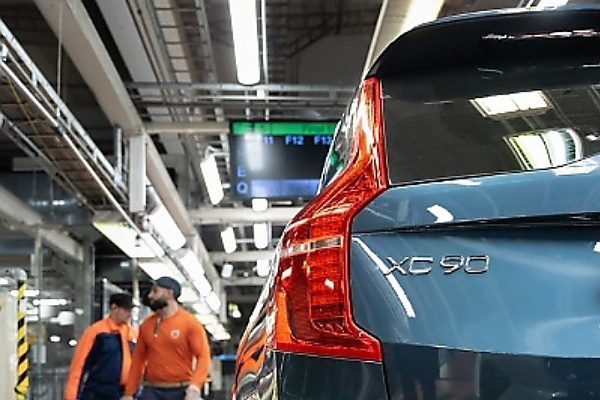
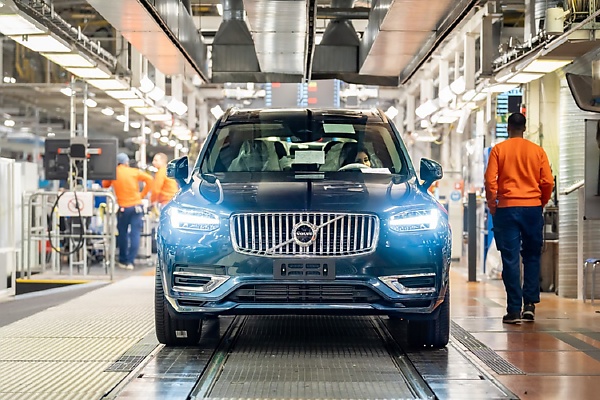
Back in May last year, Volvo announced the layoff of 3,000 employees in Sweden, and in the middle of this year, it confirmed a plan to transfer the production of the popular XC60 and XC90 models to the USA. At the time, it was said that the American factory would be an additional location, but now it is becoming more and more certain that the production of these models in Sweden will be completely shut down.
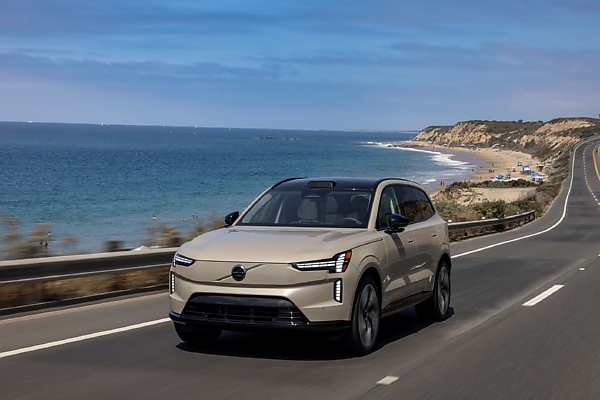
Volvo is undergoing a major transformation of production, and the main factory in Torslanda is switching exclusively to the production of electric cars. This means that models with gasoline engines and plug-in hybrids will gradually cease to be produced in Sweden. Therefore, the production of the XC60 and XC90 models will disappear from Torslanda, which will be produced in other locations in the future, primarily in the USA. At the same time, the factory will focus on a new generation of electric vehicles, led by the EX60 model.
With this move, Volvo wants to reduce the number of platforms, components, and production complexity, which should reduce costs and increase efficiency. Torslanda will switch from two platforms to one, intended for medium-sized electric models.
The biggest concern in Sweden concerns 6,500 employees. Volvo admits that some jobs could disappear because the production of electric cars requires fewer labor operations and components, although at the same time new jobs should be created in specialized areas.
Employees also fear the risk associated with the demand for electric cars. The example of Ford’s Cologne plant shows that switching to all-electric production can lead to a large drop in capacity utilization if sales are not strong enough.
The decision marks the end of a 62-year production era in Torslanda, while the production of cars with internal combustion engines in Sweden practically ends after almost 100 years.
Volvo is simultaneously expanding and changing the production network. Belgium will retain greater flexibility, Slovakia is getting a new factory, America will produce larger models, and China will play an increasingly important role in global production.
The essence of the change is clear, and there are more and more similar scenarios across Europe. Volvo wants to simplify production, reduce the number of platforms and costs, and turn Torslanda into an all-electric production facility. However, the price of that transformation could be a significant number of lost jobs and a greater dependence of the Swedish factory on the success of electric models.










-

 Celebrities Auto1 week ago
No Innoson This Year As BBNaija Season 11 Winner Temi Receives ₦60m Hyundai Tucson, ₦90m Cash Prize
-

 Celebrities Auto4 days ago
Is OGB Recent’s “Mansory Lamborghini Urus” Genuine? Auto Spotters Raise Questions
-
 Car Comparison6 days ago
3-minute Battery Swap Or 5-minute Charging? China’s EV Drivers Face A New Choice
-

 News1 week ago
Carloha Goes “The Extra Mile” To Redefine Vehicle Ownership Experience In Nigeria
-

 Auto Fun7 days ago
Cadillac F1 Driver Bottas Swaps Short Flight For Epic 420km Bike Ride From Malaysia To Singapore
-

 Latest Cars1 week ago
All-New 2027 Hyundai Tucson Unveiled With Bolder Design, Hybrid Power And New Tech
-
 Latest Cars1 week ago
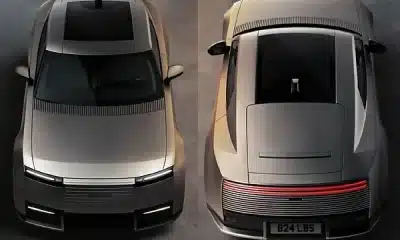
JLR Unveils 2027 Jaguar Type 01, A 1,016-HP Electric GT With 400-Mile Range, $170,000 Price
-

 News5 days ago
F1: Verstappen Takes First Win In Singapore, Antonelli One Step Closer To Title