
News
Toyota Is Scared Of The “Made With Europe” Initiative

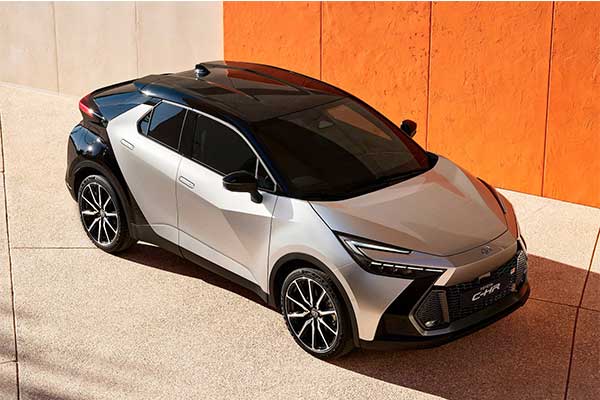
Toyota sees the writing on the wall. Now that the European Union is taking increasingly protectionist measures to safeguard its industry and is working on new automotive regulations, it is calling on the EU and other policymakers. ‘Made with Europe’ would be preferable to ‘Made in Europe’, according to Toyota, which produces many models outside Europe.
Toyota fears being negatively impacted by new regulations and emphasizes that Toyota is ‘no guest in Europe’. It even calls itself ‘a European manufacturer’ and says that it prefers to see European industry flourish. The brand says that it supports the Industrial Accelerator Act – through which Europe aims to strengthen its own industry – but that its ambition must match consumer demand and the speed at which the market is changing.
With ‘Made with Europe’, Toyota indicates that it believes cars built entirely within the EU should not be considered European only. For instance, the European Union should exempt cars built in ‘trusted partner countries such as Turkey, the United Kingdom, and Japan’. By including those countries, Toyota believes a market of approximately 31 million cars will be created, enabling Europe to compete better internationally.
The brand believes that the requirements regarding a car’s European share should be introduced gradually. After three years, that share should reach 70 percent. This requires looking not only at the origin of parts but also at factors such as where engineering, research, development, and final assembly take place. In Europe, Toyota has factories in France, the United Kingdom, the Czech Republic, Poland, Portugal, and Turkey, among others.
More flexible CO₂ targets
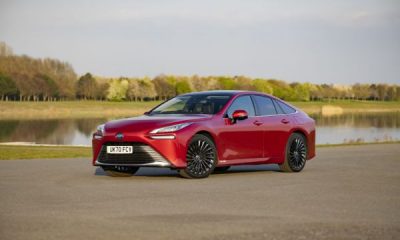
Toyota has more to say. For instance, it believes that European CO₂ regulations need to be more flexible. The brand advocates for a five-year period, from 2028 to 2032, during which automakers can meet the CO₂ targets. For 2035, Toyota proposes a 90 percent CO₂ reduction. Under this plan, cars with internal combustion engines running exclusively on fully renewable fuels should be classified as zero-emission vehicles. Hydrogen cars should, for now, be exempt from European production requirements.
Toyota proposes to reduce CO₂ emissions from light commercial vehicles by 35 percent in 2030 and by 80 percent in 2035. According to Toyota, it should be possible to average the figures over a five-year period.
British rules also need to be overhauled.
Toyota is not only setting its sights on Brussels but is also urging the United Kingdom to better align its Zero Emission Vehicle mandate with European regulations. For 2030, the manufacturer proposes a maximum share of zero-emission cars of 50 percent and 40 percent for light commercial vehicles. Manufacturers should also be given more time to meet the targets.










-

 Celebrities Auto5 days ago
Is OGB Recent’s “Mansory Lamborghini Urus” Genuine? Auto Spotters Raise Questions
-
 Car Comparison1 week ago
3-minute Battery Swap Or 5-minute Charging? China’s EV Drivers Face A New Choice
-

 Auto Fun1 week ago
Cadillac F1 Driver Bottas Swaps Short Flight For Epic 420km Bike Ride From Malaysia To Singapore
-
 Latest Cars1 week ago
All-New 2027 Hyundai Tucson Unveiled With Bolder Design, Hybrid Power And New Tech
-

 News6 days ago
F1: Verstappen Takes First Win In Singapore, Antonelli One Step Closer To Title
-
 News1 week ago
The Next-Generation Mazda BT-50 Is In Development Phase
-

 News1 week ago
Amalgamated Megacity Transport Services Launches In Lagos With 50 CNG-Powered Buses
-
 News1 week ago
The EU Is Preparing A New Discussion! Petrol (And Diesel) Will Get Even More Space?!