
News
BMW To Keep Making Big Engines Despite Stiff EU Regulations

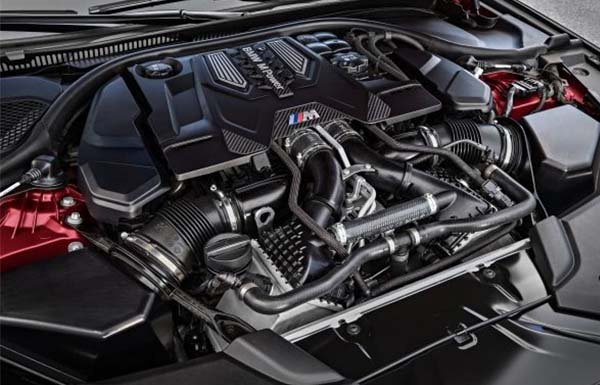
BMW will continue to produce its large internal combustion engines despite increasingly stringent emissions regulations. Inline six-cylinder engines and V8 engines will remain on offer, as will the V12 powertrain reserved for Rolls-Royce.
Although stricter emissions regulations, particularly the Euro 7 norm in the European Union, are seen as a major challenge for manufacturers, BMW has taken steps to ensure the survival of its larger engines. In an interview with Autocar, the company’s chief technology officer, Joachim Post, explained that the next-generation engines were designed from the start to meet more demanding conditions.
“We can meet Euro 7 with certain optimizations in the exhaust system—with components like catalytic converters – so we have a big advantage in that Euro 7 is not such a high investment for us,” said Post.
In addition to regular six-cylinder and V8 engines, the V12 remains in production, which is exclusive to the Rolls-Royce brand, as BMW discontinued its last twelve-cylinder model, the M760i Final Edition, in 2022. The Post hinted that the next generation of BMW products will feature a V12 but did not explain whether this applies exclusively to Rolls-Royce or to BMW models as well.
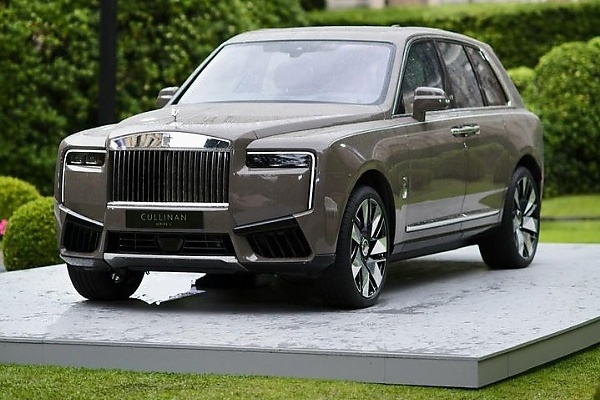
Should the 6.75-litre twin-turbo assembly be found outside the Goodwood model, it could fit into the new BMW Alpina sub-brand, which is positioned above standard BMW models as a competitor to Mercedes-Maybach. However, there is no official confirmation yet, and the “N74” engine could remain reserved for Rolls-Royce Ghost, Cullinan, and Phantom models.
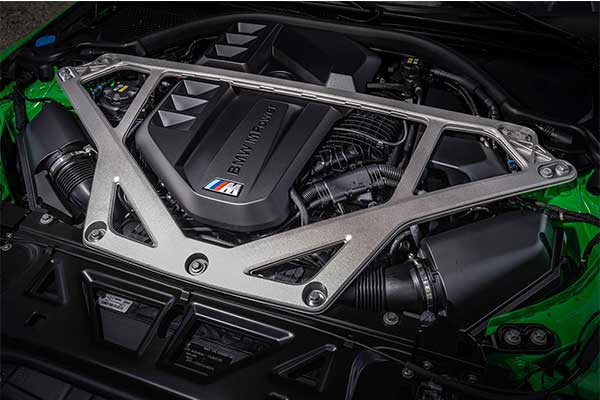
Although a fully electric M3 has been announced for 2027, BMW is also planning a gasoline version. It is expected to arrive about a year after the electric model, offering buyers a choice. The internal combustion engine model will utilise an updated version of the 3.0-litre “S58” inline-six twin-turbo engine, possibly incorporating mild hybrid technology to comply with EU regulations.
The post also suggested that the M4 could get another generation as well. The current model’s life cycle has reportedly been extended to mid-2029, meaning a replacement wouldn’t arrive until 2030.









-

 Celebrities Auto4 days ago
Throwback: When KC Luxury Boasted Of Being The Only Person In The World To Own Two Rare Mercedes-Maybachs
-
 Celebrities Auto6 days ago
Inside KC Luxury’s Car Collection: From A ₦2.5B Brabus 800 Adventure XLP To Alicia Keys’ Former Maybach
-
 News1 week ago
Mansa Fulfills Challenge: TikTok Star Peller Gifted ₦300 Million Mercedes-Benz G-Wagon
-
 News1 week ago
Ultra-Rare, Centre-Driving McLaren F1 GTR Fetches Record $34.6 Million At Auction
-
 News1 week ago
Porsche And Chinese Company Xpeng Collaborate To Lower Average Emissions In Europe
-
 News15 hours ago
Andrew Tate’s Lawyers Claim His Famous Bugatti And Aston Martin Are Rented
-

 News1 week ago
“Wike Carry ‘Rivers’ Come Abuja”: Citizens React As Flash Floods Submerge Luxury Vehicles
-
 News4 days ago
Who Is Herbert Wertheim? The 87-Year-Old Billionaire Who Bought The $40M Ferrari Luce “Chassis 0”