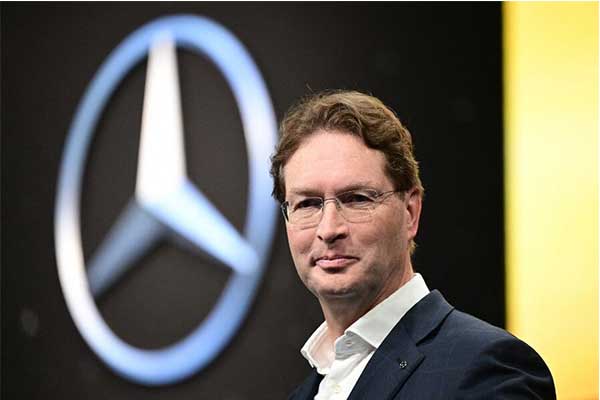

Amid persistent trade tensions, the United States has been using a range of measures for several months to attract industrial investment. Tariffs, tax credits, promises of more favorable regulatory frameworks: the arsenal is well-known. But in the case of Mercedes-Benz, the approach went further than usual. The information has only just been revealed, a few months later: the Trump administration reportedly tried to convince Mercedes-Benz to relocate its headquarters to the United States. In other words, not just to increase production there, but to move the group’s decision-making center. An unusual proposal, publicly revealed by its CEO, Ola Källenius.
The outright refusal of a century-old group
In an interview with the German media outlet The Pioneer, Ola Källenius confirmed that he had been approached by US Commerce Secretary Howard Lutnick about a year earlier. The offer included tax breaks and various economic incentives designed to make the deal attractive. But for the German automaker, the response was swift: “The three-pointed star brand has been a global company for over 100 years, but we are rooted in Germany. These roots cannot and must not be uprooted,” the executive stated. This loaded statement draws a clear line between industrial globalization, in which everyone participates, and a purely strategic uprooting.
Produce in the United States, without shifting the center of gravity
Obviously, Mercedes’ refusal doesn’t reflect a rejection of the American market. Quite the opposite, in fact, since the manufacturer already produces several models at its Tuscaloosa, Alabama, plant and has announced that the GLC will be assembled there starting in 2027. Furthermore, a new research and development center is also planned for Georgia. The executive also points out that Mercedes has never opposed industrial investment in the United States. “Mercedes is a global company, but its decision-making center doesn’t move according to tax incentives,” he summarized. This episode serves as a reminder of what the Trump administration had apparently forgotten: relocating a production facility or investing locally is very different from relocating governance. The headquarters of a group like Mercedes concentrates its industrial identity, decision-making processes, and a significant part of the group’s engineering culture—elements that the three-pointed star considers inseparable from its historical German roots.