
News
Chinese Automakers Are Turning Their Attention To Africa.

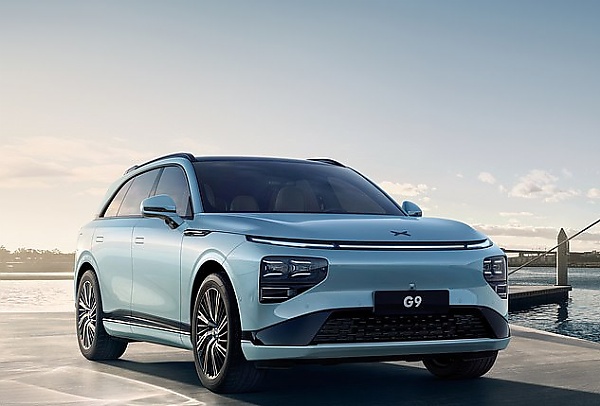
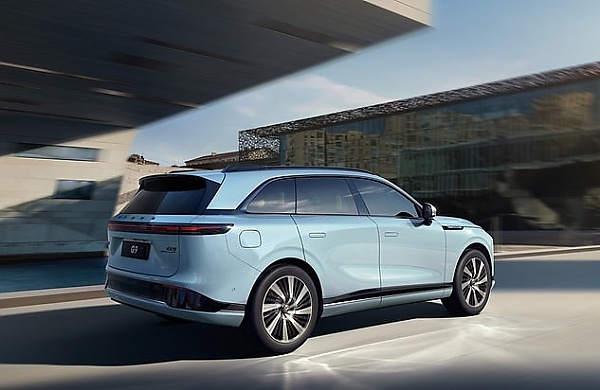
A report from the Commercial Times, referencing the South China Morning Post, shares that as the US and EU ramp up sanctions on Chinese electric vehicles (EVs), Chinese manufacturers are turning their attention to Africa. They’re excitedly stepping up their efforts to establish flagship stores and assembly plants all across the continent!
In 2023, China’s exports of new energy vehicles to Africa recorded a year-on-year growth of 291%, according to the report. Chinese-made electric buses are now a common sight on the roads in countries such as Ethiopia, Kenya, Rwanda and South Africa.
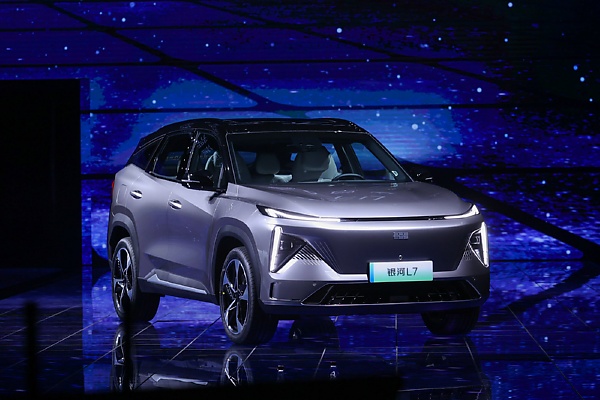
The report notes that Egypt, located at the crossroads of Asia, Africa and Europe, has become a key destination for Chinese investment, with companies such as BAIC Group and premium electric vehicle maker Geely Auto Zeekr recently announcing plans to enter the market.
For Chinese companies looking to expand into the Middle East and Africa, Egypt is a strategic location, according to the report. The BAIC Group plant in Egypt is expected to produce 20,000 electric vehicles per year by the end of 2025. The report said this figure is expected to increase to 50,000 units per year within five years of operation, according to the company’s agreement with Alkan Auto, a subsidiary of Egypt’s EIM Group.
In addition to meeting domestic demand, BAIC’s plant will take advantage of Egypt’s geographic position at the crossroads of Asia, Africa and Europe to export vehicles to other African countries and the Middle East. The report points out that the key advantage is the Suez Canal, which handles more than 10% of global trade annually, connects the Mediterranean and Red Seas and provides the shortest sea route between Asia and Europe.
Meanwhile, Zeekr, another Chinese EV brand, has announced plans to enter the Egyptian market by the end of this year, according to the report. The company signed a distribution agreement with EIM Group to establish a sales and service network in Egypt.
In addition to its strategic location, the report highlights Egypt’s low operating costs as a key advantage. Wages in Egypt are about half of those in Morocco and lower than in South Africa. Moreover, Egypt’s abundant sunlight makes it an ideal location for assembly plants focused on renewable energy sources. Its inclusion in the African Continental Free Trade Area and its proximity to high-income markets in the Middle East and Europe further strengthen its appeal, the report said.
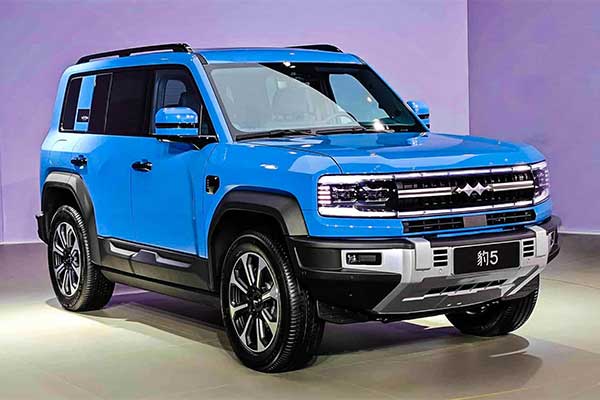
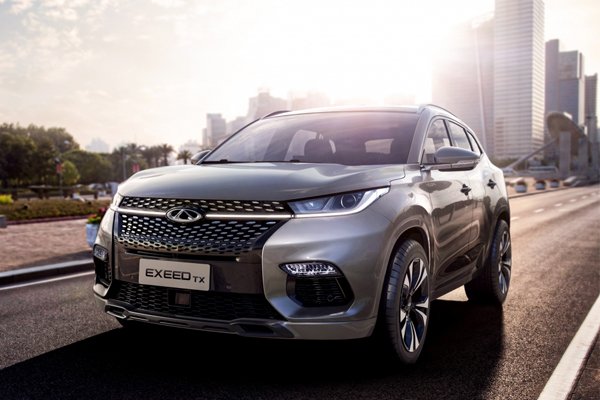
Apart from Egypt, Chinese car manufacturers are making significant inroads into African markets. Chery, for example, plans to set up a production line in Kenya, a plan likely made before the EU announced additional tariffs on Chinese electric vehicles in July. Meanwhile, BYD and XPeng have expanded to countries such as Morocco, Kenya, Rwanda, and South Africa, according to the report.
The report notes that BYD introduced three electric vehicle models in Kenya in September, following recent launches in Zambia and Madagascar, expanding its footprint to 12 African markets.








-

 Celebrities Auto1 week ago
Most Expensive In Africa : Burna Boy Takes Delivery Of His ₦9B Bugatti Chiron VXX
-

 News1 week ago
Mercedes And Rheinmetall Unveil G-Class-Based Timber Wolf And Silver Wolf For British Army
-

 Celebrities Auto1 week ago
Today’s Photos: Burna Boy’s Bugatti Chiron VXX Journey From Dubai To Abuja And Lagos
-

 Celebrities Auto5 days ago
From ₦9B Bugatti Chiron To Porsche 911 GT3 RS, 12 Impressive Cars In Burna Boy’s Multi-Billion-Naira Car Collection
-

 Celebrities Auto6 days ago
Diamond-Encrusted Key For Burna Boy’s ₦9B Bugatti Chiron VXX Can Buy A Brand-New Car
-
 News1 week ago
Bugatti W16 Mistral: $16.3M World’s Fastest Open-Top Car Gets Paint Protection Film
-

 Celebrities Auto1 week ago
Inside Andrew Tate’s Bugatti Chiron With Custom “Tate” Headrests, Which He Claimed Was Rented
-
 News1 week ago
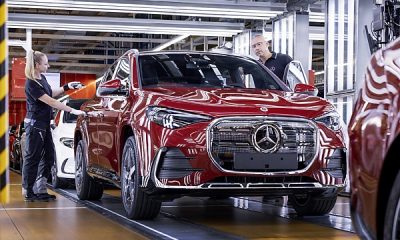
Mercedes-Benz Starts Production Of 657-km Range 2027 GLA Electric SUV