
News
Volkswagen’s sales in important markets are still low.

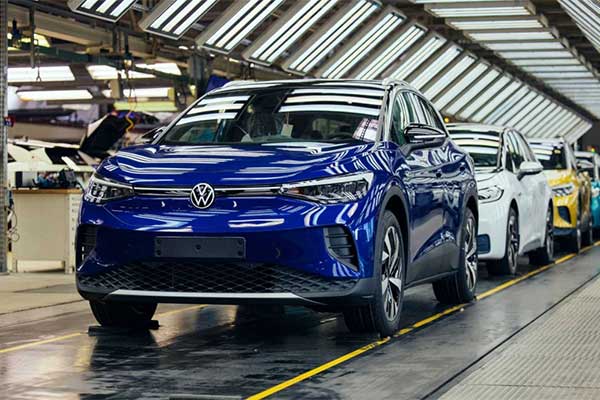
VW Group continues to suffer from weak sales figures internationally, particularly in China and the United States, the German carmaker said in Wolfsburg.
Globally, this reduced the number of deliveries in the VW Group between January and March to just 2.05 million vehicles for all Group brands, which is 4% less than a year earlier. Despite this, the group has largely maintained its global market share, albeit in the context of a significantly reduced overall market.
The war in the Middle East has not yet had a major impact on the total deliveries of the VW Group.
In China, where Volkswagen is struggling with a shrinking market and local competition, 548,700 vehicles were delivered in the quarter, almost 15% less than in the same period last year.
In North America, where European automakers are suffering from President Donald Trump’s new tariffs, deliveries fell more than 13% to 205,500 vehicles. In the United States, the drop was as much as 20.5%.
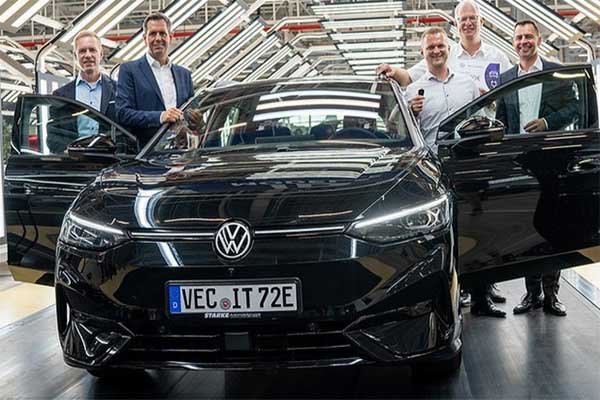
China: A Huge Factor
However, there was a surprising success in China: in the first three months, the VW brand, including the Jetta, recovered to become the market leader there. This was mainly due to changes in subsidies for electric cars, which affected domestic electric car brands. VW, on the other hand, managed to slightly expand its market share again thanks to its strong internal combustion engine business. However, the Wolfsburg-based company does not expect this to remain the case until the end of the year.
Last year, VW fell to third place in China in terms of new registrations, behind electric car makers BYD and Geely. Before that, VW was the market leader in the country for decades.
However, in Germany and across Europe, Europe’s largest carmaker saw growth. Almost 850,000 cars were delivered in Western Europe, up 4.2% from a year ago; in Eastern Europe, the figure was 135,000, up 7.6%. In Germany, the growth was 4.8%.
The group also grew in South America, by 7% to 148,000 vehicles. However, this was not enough to offset declines in China and North America.
There was also a significant drop in electric car sales, which had previously been growing steadily: global deliveries fell by 7.7% to just 200,000 vehicles. The decline was therefore even more pronounced than for vehicles with internal combustion engines.
In China, sales of electric cars – already weak there – fell by almost 64%. This was due to changes in subsidy regulations.
In the United States, where President Trump has completely removed subsidies for electric cars, sales have fallen by as much as 80%. VW has since taken action. On Friday, the group announced that it will stop production of the ID.4 electric car in the US. Instead, more SUVs with Atlas-type internal combustion engines will be produced there.
In Europe, the group’s deliveries of electric cars continued to grow, by 11.5% to 176,400 vehicles.
Demand for plug-in hybrids is also growing again. In the first quarter, the group delivered 31% more plug-in hybrids worldwide than in the same period last year.
The VW Group’s sales figures have already fallen in the previous two years. In 2025, sales fell below nine million vehicles, with 8.98 million vehicles delivered. The difference compared to the leading company in the market, Toyota, which increased sales to 11.3 million, thereby increasing further. In 2020, the Japanese manufacturer overtook Volkswagen as the world’s largest manufacturer.










-
 News1 week ago
Kaduna Governor Unveils 2026 Peugeot 3008 And 5008 SUVs, Urges Govt Patronage
-

 Celebrities Auto6 days ago
Afrobeats Star Kizz Daniel Splashes ₦1.6 Billion On Brand New 2026 Ferrari Purosangue SUV
-
 News1 week ago
Top Auto News Last Week: Uber Exits Nigeria, Launches UK Robotaxi, Tesla Debuts Steering-Wheel-Free Cybercab, Kaduna Gov Unveils 2026 Peugeot 3008 And 5008
-
 News1 week ago
No Steering Wheel, Brake Pedal: US Launches Probe Into Elon Musk’s ‘Cybercab’ Self-Driving Taxis
-
 Celebrities Auto6 days ago
Burna Boy’s ₦9 Billion Bugatti Chiron VXX: The Making By Venuum
-

 Auto Fun1 week ago
Police Impound Fake Armored ‘Beast’ Limo After Trump Look-alike’s Motorcade Stunt Violates Law
-

 Auto Sport1 week ago
New Mercedes-Benz S-Class “140 Years. 140 Places” Global Tour Reaches Africa As Nigeria Misses Out
-
 News3 days ago
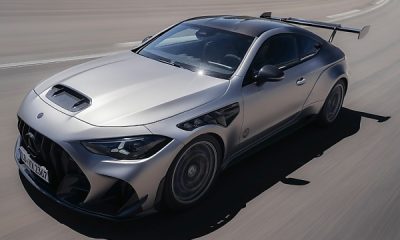
Mercedes-AMG CLE 646 Spezialanfertigung: Sold-Out 646-HP Collector’s Item Limited To Just 30 Units