
News
Why Hyundai, KIA Are Joining VW, Nissan, Toyota To Set Up Auto Assembly Plants In Ghana Instead Of Nigeria

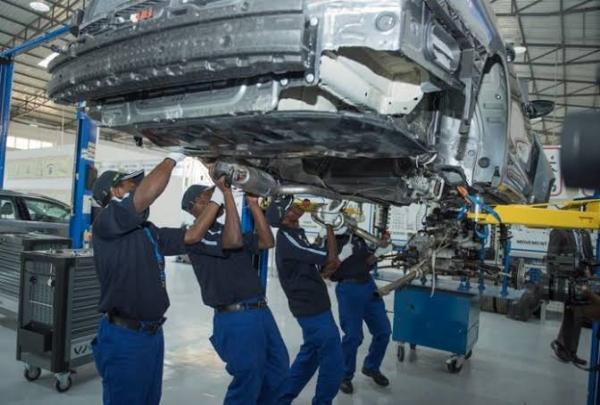
Why Hyundai, KIA are joining Volkswagen (VW), Nissan, Toyota, Sinotruk, Suzuki to set up auto assembly plants in Ghana instead of Nigeria.
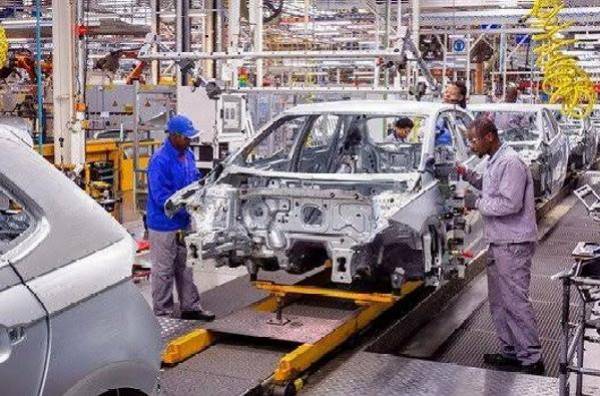
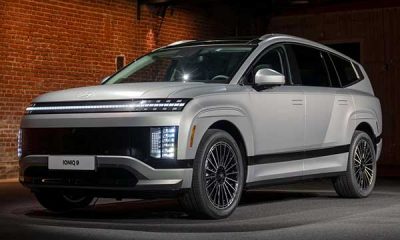
Ghana’s Minister of Trade and Industry, Alan John Kyerematen has announced that four global automakers, including Hyundai and Kia, had reached an agreement with the government to establish assembly plants in the country.
In a tweet posted on Thursday, the Minister said South Korean automakers will establish assembly plants in Ghana by the end of 2022.
“The Ghana Auto Development programme” will create “6,600 manufacturing parts jobs in Ghana,”
Kyerematen explained that the incentives from government to the local auto industry designed to attract the auto makers to Ghana.
Ghana Automotive Development Policy (GADP) was envisioned to make the country an automotive hub. Its plan is to have its locally assembly vehicles exported to other markets in the West African region, including Nigeria.
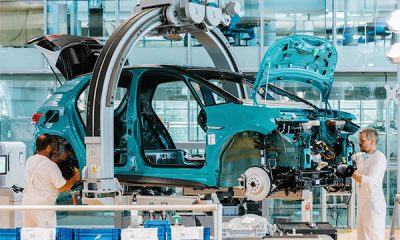
German automaker Volkswagen was the first to be attracted by the GADP. The automaker opened its assembly plant in Accra in August, 2020, just two years after signing memoranda of understanding with both Ghana and Nigeria. Plan to establish a similar facility in Nigeria remains on hold till today.
A spokesman for Volkswagen Group South Africa’s head of group communications, Andile Dlamini, explained that lack of legal support for the Nigeria Automotive Industry Development Plan (NAIDP) was one of the reasons VW hasn’t established a plant in Nigeria.
Dlamini also cited the Nigeria’s unwillingness to impose stricter measures against the importation of used vehicles as another reason why Volkswagen had failed to start assembling vehicles in Nigeria.
“The Nigerian government undertook to implement the draft automotive policy, which was before the National Assembly, into law.
“This would have paved the way for certainty for automotive manufacturers to establish themselves in Nigeria in a meaningful way”
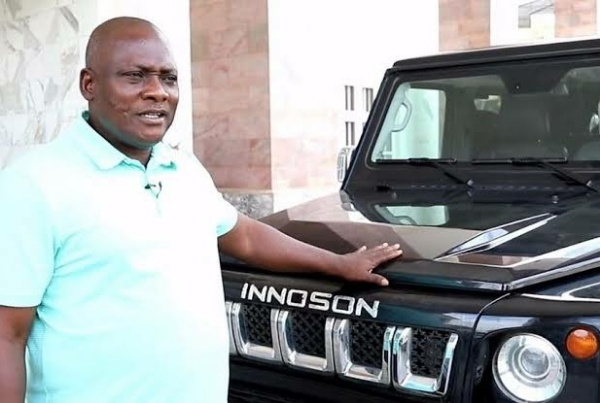
Innoson
“The policy would create a fostering environment to competitively introduce new vehicles, by phasing out used vehicle imports of dubious quality, safety and emissions.”
“Improved levying of duties and taxes, which at present favour used over new vehicles, was also promised. To date, the policy has not been signed and the used vehicle issue has not been addressed to a point that provides certainty that the new vehicle market can grow within normal market forces. Ghana has followed up on these commitments,”
Nissan, Suzuki, Sinotruk, and Toyota, who were apparently encouraged by Ghana’s friendlier investment climate, are currently operating in the country.
Local automaker, Kantanka, Ghana’s answer to Innoson in Nigeria, is also enjoying the support GADP accords to the foreign brands operating locally.







-

 Celebrities Auto6 days ago
Most Expensive In Africa : Burna Boy Takes Delivery Of His ₦9B Bugatti Chiron VXX
-
 News1 week ago
Mercedes And Rheinmetall Unveil G-Class-Based Timber Wolf And Silver Wolf For British Army
-

 Celebrities Auto6 days ago
Today’s Photos: Burna Boy’s Bugatti Chiron VXX Journey From Dubai To Abuja And Lagos
-

 Auto Sport1 week ago
Three Rare 1926 Bugatti Type 41 Royales Reunite at Bugatti’s Spiritual Home to Mark 100th Anniversary
-
 Celebrities Auto5 days ago
Diamond-Encrusted Key For Burna Boy’s ₦9B Bugatti Chiron VXX Can Buy A Brand-New Car
-

 Celebrities Auto4 days ago
From ₦9B Bugatti Chiron To Porsche 911 GT3 RS, 12 Impressive Cars In Burna Boy’s Multi-Billion-Naira Car Collection
-
 News7 days ago
Bugatti W16 Mistral: $16.3M World’s Fastest Open-Top Car Gets Paint Protection Film
-
 News1 week ago
Mercedes-Benz Starts Production Of 657-km Range 2027 GLA Electric SUV