
News
Compared To Toyota, Volkswagen Employs 60% More People And Produces Less. Why?

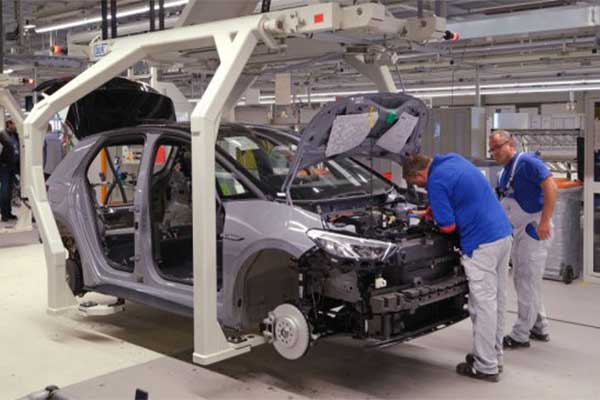
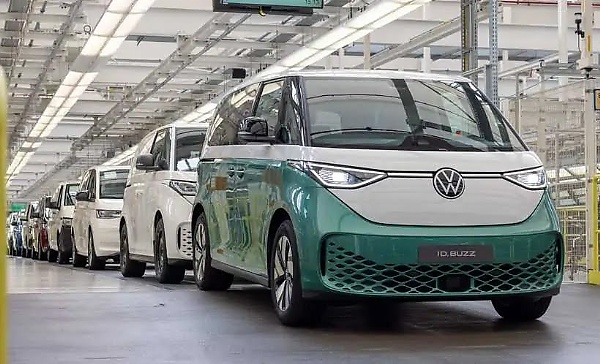
The Volkswagen Group employs about 60 percent more people than Toyota, but the Japanese manufacturer simultaneously produces and sells significantly more cars. This is precisely why the German car giant is carrying out extensive restructuring, and according to current plans, it could eliminate up to 140,000 jobs to reduce operating costs.
According to available data, the Volkswagen Group today employs around 629,000 people worldwide, while Toyota has significantly fewer, around 391,000 employees. Although it has almost 240,000 fewer employees, Toyota delivered 5.39 million vehicles in the first half of the year, while Volkswagen delivered 4.13 million in the same period.
According to the German DW, the comparison of the two companies is not entirely straightforward.
Volkswagen still does much of its production within its own system, including component manufacturing, development and engineering. Such a business model has been one of the company’s strengths for years and helped it grow into one of the largest industrial manufacturers in the world. However, at the same time, it led to high operating costs that are increasingly difficult to maintain today.
To reduce costs and increase efficiency, Volkswagen expanded its restructuring plan. According to current estimates, the company could eliminate up to 140,000 jobs to achieve savings.
Volkswagen is not the only manufacturer that adapts its operations to the changed market conditions. Similar moves are being made by other German car manufacturers.
As reported by Reuters, a member of the BMW Management Board, Milan Nedeljković, told employees last week that “the rules governing the automotive industry have changed significantly.” BMW then announced that it planned to cut the number of employees by about 8,000 workers, after weaker demand in China and a decline in sales negatively affected business results.
Porsche has announced plans to cut an additional 5,000 jobs in Germany by the end of 2035, which represents approximately one in five employees.
Mercedes-Benz chose a different approach. In addition to the voluntary reduction in the number of employees, part of the production of its best-selling models moved from Germany to Hungary, where labor costs are significantly lower.
The automotive industry has faced several challenges in recent years, including the strengthening of Chinese manufacturers in the global market, declining profitability in China, slower-than-expected demand growth for electric cars, US tariffs, high energy prices, and geopolitical instability.










-

 Celebrities Auto6 days ago
Is OGB Recent’s “Mansory Lamborghini Urus” Genuine? Auto Spotters Raise Questions
-
 Car Comparison1 week ago
3-minute Battery Swap Or 5-minute Charging? China’s EV Drivers Face A New Choice
-

 Auto Fun1 week ago
Cadillac F1 Driver Bottas Swaps Short Flight For Epic 420km Bike Ride From Malaysia To Singapore
-

 Latest Cars1 week ago
All-New 2027 Hyundai Tucson Unveiled With Bolder Design, Hybrid Power And New Tech
-

 News6 days ago
F1: Verstappen Takes First Win In Singapore, Antonelli One Step Closer To Title
-
 News1 week ago
The Next-Generation Mazda BT-50 Is In Development Phase
-

 News1 week ago
Amalgamated Megacity Transport Services Launches In Lagos With 50 CNG-Powered Buses
-
 News1 week ago
The EU Is Preparing A New Discussion! Petrol (And Diesel) Will Get Even More Space?!