
News
Smart To Bring Back Its Two Seater City Car

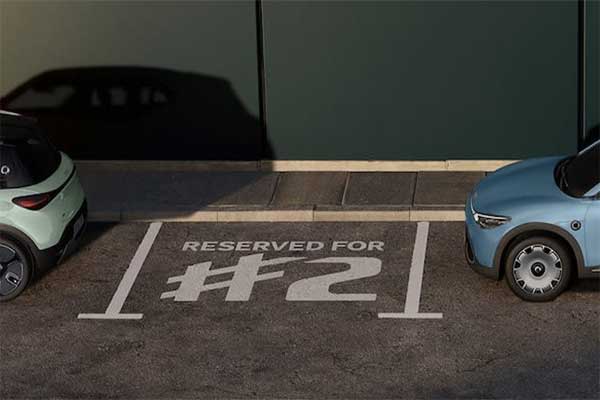
Smart has confirmed that it will bring back the city two-seater in a new guise and that the upcoming Smart #2 will serve as a modern reincarnation of the original icon.
The Smart #2 was announced following the successful completion of “Project: Two,” the company’s internal feasibility study for a next-generation city car.
This new model will be an all-electric, ultra-compact two-seater built on Smart’s own platform, designed specifically for A-segment vehicles. Unlike the current SUV lineup, the #2 emphasizes a minimal footprint and urban practicality.
Mercedes-Benz Design will handle the styling of the #2, while Smart’s in-house research and development team will develop the vehicle.
Production will take place in China, where the brand has its production base. Despite harkening back to its city car heritage, the #2 is said to feature modern connectivity and efficiency solutions designed for city use. With the #2, Smart wants to show that its model line can encompass both premium small SUVs and ultracompact solutions without losing the character that once made the ForTwo special.
The premiere of the Smart #2 is planned for the end of 2026, before it appears in China, Europe, and selected global markets.







-

 Car Theft1 week ago
Man Flees With Stolen Tundra During Test-Drive, Crashes Into Lagos Canal After Damaging Dozens Of Vehicles
-
 News1 week ago
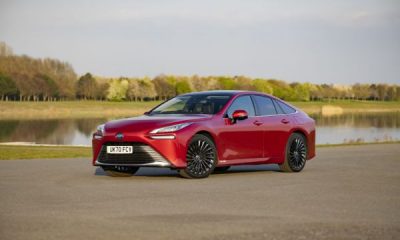
The Toyota Mirai Is Turning Out To Be The Worst Resale Value Car The Company Has Ever Made
-

 Celebrities Auto7 days ago
Lionel Messi Just Ordered Sunreef’s ULTIMA 88 Luxury Yacht, Worth Up To $10.7 Million
-
 News1 week ago
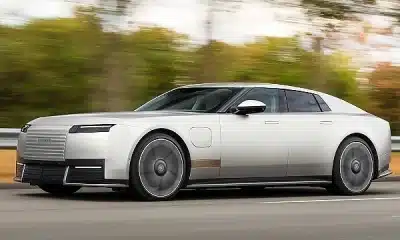
The New Electric Jaguar Type 01 Has Reportedly Received 50,000 Orders
-
 News1 week ago
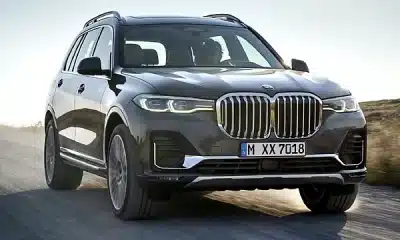
BMW Considers New Flagship SUV To Sit Above The X7, Specifically For US Market
-

 News5 days ago
OMODA & JAECOO Strengthen European Presence, Record 73,421 Global Sales
-
 News7 days ago
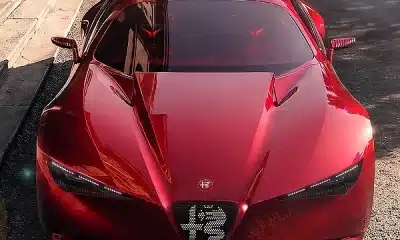
Alfa Romeo Cuorerosso Concept Debuts With 2+2 Coupé Design, 2.9L V6 Full-Hybrid Powertrain
-
 News1 week ago
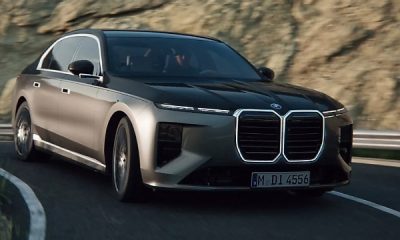
BMW Is Bringing The V8 Back In Another Model