
News
Boeing Autonomous Passenger Air Vehicle,Designed To Fly Over Congested Highways,Completes First Flight

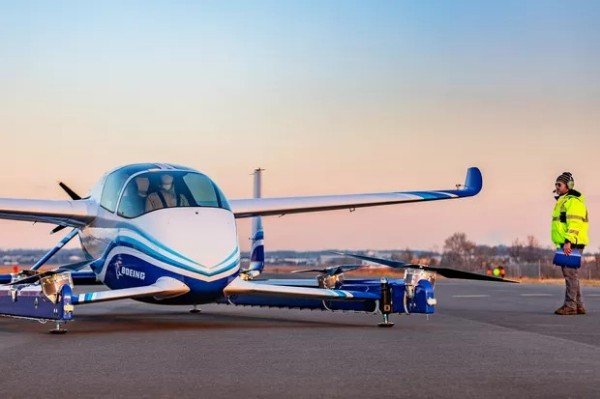
US commercial jets maker,Boeing Co, on Tuesday successfully completed a controlled takeoff, hover and landing test flight of its prototype autonomous Passenger Air Vehicle in Manassas, Virginia.
The autonomous flying taxi ,which could start carrying passengers that can afford it over congested highways as early as next year, is designed and developed by the aircraft maker’s Boeing NeXt and its subsidiary,Aurora Flight Sciences.
Boeing said:
“In one year, we have progressed from a conceptual design to a flying prototype”
“Boeing’s expertise and innovation have been critical in developing aviation as the world’s safest and most efficient form of transportation, and we will continue to lead with a safe, innovative and responsible approach to new mobility solutions”
Flying Taxis Are Here ! .Would You Fly In One ?
Boeing’s electric motor powered Autonomous Passenger Air Vehicle (PAV) is a vertical take-off and landing vehicle that lifts like a helicopter instead of needing space for a runway to deploy.
Boeing said the next tests will focus on transformating the vertical flight to forward motion and then wing-borne flgiht,which is regarded as the most difficult part for any Vertical Take Off And Landing Machine.















-

 News4 days ago
Currently, China Has 129 Manufacturers Of Electric And Hybrid Vehicles; The Majority Will Fail
-

 News4 days ago
Hyundai Motor Workers Are On A 3-Day Warning Strike
-

 News4 days ago
Bidding For This Stripped 2024 Mercedes-AMG G63 With No Rear End Surpasses $18,000 On Copart
-

 News3 days ago
Lamborghini’s Next Model Will Be A Grand Tourer And Will Not Be Electric
-

 News3 days ago
Ferrari Is “Very Happy” With The Luce’s Reactions
-

 Car Facts1 week ago
How Intelligence And Car Selection Are Related: Research Reveals Which Drivers Have The Highest IQs
-

 News5 days ago
Dubai Police Unveils 2nd-Gen AI-Powered ‘Ghiath’ Smart Patrol Based On Denza B8 Hybrid SUV
-

 News3 days ago
Lamborghini Sterrato To Cut Across Multiple Models